
Semiconductor O-Rings for Wafer Processing
Ultra-high purity FFKM and PTFE seals for plasma chambers, CVD, etch and deposition tools.
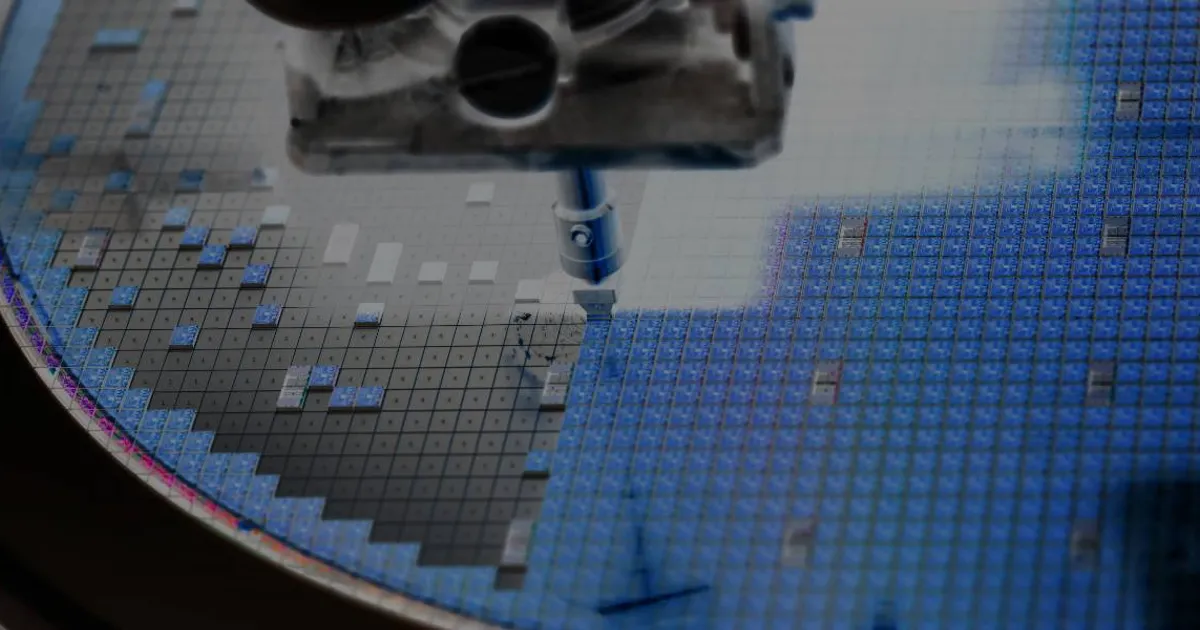
Semiconductor manufacturing requires seals that will not outgas, shed particles, or react with aggressive process chemistries. Plasma etch, chemical vapour deposition (CVD), and atomic layer deposition (ALD) chambers use fluorinated gases, strong oxidisers, and high temperatures that destroy standard elastomers within hours. A single particle falling on a wafer can destroy a $10,000 device, making seal contamination control paramount. We supply ultra-high purity FFKM (perfluoroelastomer) and virgin PTFE seals specifically formulated for semiconductor fab equipment. These materials resist O2 plasma, CF4, Cl2, NF3, and high-temperature process gases while maintaining extremely low particle generation and extractable levels. All semiconductor-grade seals are manufactured in controlled environments, cleaned in ultra-pure water, and packaged in nitrogen-purged bags to prevent contamination before installation. The semiconductor fabrication environment is uniquely hostile to elastomers. Plasma etch chambers use RF-generated plasmas of O2, CF4, SF6, and Cl2 to selectively remove material from wafer surfaces. These plasmas are chemically aggressive and operate at temperatures up to +300°C. CVD and ALD chambers deposit thin films using precursor gases (silane, tetrachlorosilane, organometallics) at temperatures of +200°C to +600°C. Wet etch and cleaning stations use strong acids (HF, HCl, H2SO4) and solvents (acetone, isopropanol, NMP). Each process step imposes different demands on seal materials, and a seal that survives the etch chamber may be destroyed in the CVD chamber. Outgassing is a critical concern in semiconductor manufacturing. Vacuum chambers operate at pressures of 10⁻³ to 10⁻⁹ Torr, and any volatile compounds from the seal will outgas into the chamber, depositing on wafers and chamber walls. Standard elastomers contain plasticizers, processing aids, and cure residues that outgas significantly. Semiconductor-grade FFKM is formulated without these additives, using only ultra-pure fillers and peroxide cure systems with extended post-curing to remove all volatile components. Outgassing is measured by ASTM E595 (total mass loss <1.0%, collected volatile condensable materials <0.10%), and semiconductor-grade FFKM typically achieves TML <0.5% and CVCM <0.05%. Particle generation is equally critical. Standard carbon-black-filled compounds can shed particles that contaminate wafers. Semiconductor-grade FFKM uses non-carbon fillers (metal oxides, fluorides) or is supplied in white/translucent form. The compound must also have high purity—metallic ion content (Na, K, Fe, Cu, Ni) must be extremely low, as these ions can migrate into silicon and affect device electrical properties. Metallic ion content is measured by ICP-MS, with semiconductor grades typically requiring <1 ppm for each critical element. Plasma resistance is the defining property for etch chamber seals. Oxygen plasma aggressively oxidizes hydrocarbon bonds, causing standard elastomers to erode rapidly. Fluorine plasmas (CF4, SF6) cause depolymerization of non-fluorinated materials. Only fully fluorinated compounds (FFKM, PTFE) can survive prolonged plasma exposure. Even among FFKM compounds, plasma resistance varies with filler type and cure system. White/translucent FFKM grades with inorganic fillers outperform carbon-black-filled grades in oxygen plasma by a factor of 2–3×. Our semiconductor sealing program includes comprehensive material qualification per SEMI standards. We provide outgassing data (ASTM E595), metallic ion content (ICP-MS), particle count data, and plasma erosion rate measurements. All semiconductor-grade seals are manufactured in ISO Class 7 cleanrooms, ultrasonically cleaned in 18 MΩ·cm water, and packaged in nitrogen-purged, double-bagged containers. Custom compounds can be developed for specific process chemistries, with full validation including chamber testing at customer facilities.
Application Requirements
Recommended Materials
FFKM
Plasma etch chambers, CVD seals, ALD valve seals, and any application requiring the ultimate combination of plasma resistance, thermal stability, and low outgassing. White or translucent grades avoid carbon black particle contamination.
Semiconductor / plasma grade (white or translucent)
PTFE
Static chamber seals, gas line fittings, pump seals, and applications where the seal does not require elastic recovery. Virgin PTFE has the lowest outgassing and highest chemical resistance of any seal material.
High-purity virgin
FKM
Less aggressive wet benches, auxiliary gas lines, and peripheral equipment where plasma and extreme temperature are not present. FKM offers a lower-cost alternative to FFKM for non-critical applications.
High-fluorine, low-extractable
FFKM (Low Outgassing Grade)
Ultra-high vacuum applications, molecular beam epitaxy (MBE), and electron beam lithography where outgassing must be minimized to the absolute limit. Extended post-curing removes virtually all volatile components.
AMS-compatible, extended post-cure
PFA-Encapsulated Silicone
Applications requiring the elasticity of silicone combined with the chemical resistance of fluoropolymer. The PFA jacket provides chemical and particle barrier while the silicone core provides sealing force.
PFA jacket over silicone core
Design Tips
- 1.Specify white or translucent FFKM to avoid carbon black particle contamination. Carbon black can shed particles that contaminate wafers and affect device yield.
- 2.Use platinum-cured compounds where possible for the lowest metallic ion content. Peroxide curing can leave metallic residues from the co-agent.
- 3.Design grooves with 18–25% compression for static chamber seals. Higher compression increases stress and potential particle generation; lower compression may leak in vacuum.
- 4.Avoid lubricants that are not semiconductor-grade; specify dry or cleanroom-approved lubricants. Standard lubricants contain hydrocarbons that outgas and contaminate chambers.
- 5.Package seals in nitrogen-purged bags to prevent contamination before installation. Exposure to ambient air can deposit organic contaminants and particles on seal surfaces.
- 6.Use metal O-rings or C-rings for ultra-high vacuum applications below 10⁻⁷ Torr where even FFKM outgassing is unacceptable.
- 7.Design grooves with smooth radii (R ≥ 0.2 mm) to prevent stress concentration and microcracking that could generate particles.
- 8.Validate seal materials in actual process chambers before production deployment. Laboratory tests cannot fully replicate the complex chemistry and plasma conditions of production tools.
Common Sizes
| Size | Typical Use |
|---|---|
| AS568-006 to AS568-050 | Small gas line fittings and instrument connections |
| AS568-110 to AS568-178 | Pump and valve seals in gas distribution systems |
| AS568-210 to AS568-284 | Large chamber door and viewport seals |
| Custom sizes for specific chamber OEM drawings | General application |
Frequently Asked Questions
Why is FFKM preferred over FKM in plasma chambers?
FFKM has higher fluorine content (typically 72–73% vs. 66–68% for FKM) and better thermal stability, making it far more resistant to plasma etching and aggressive oxidising chemistries used in semiconductor processing. In oxygen plasma, FFKM erodes at approximately 0.1–0.3 μm/hour compared to 1–3 μm/hour for FKM. In fluorine plasmas (CF4, SF6), the difference is even more dramatic—FKM can be destroyed within hours, while FFKM survives 1,000+ hours. The fully fluorinated backbone of FFKM (all hydrogen atoms replaced by fluorine) provides the ultimate chemical resistance. Additionally, semiconductor-grade FFKM is formulated with inorganic fillers (metal oxides, fluorides) rather than carbon black, eliminating particle contamination. For critical etch chambers where downtime costs thousands of dollars per hour, FFKM is the only reliable choice.
Can carbon-black-filled seals be used in semiconductor tools?
No. Carbon black can shed particles and contaminate wafers. A single 0.5 μm particle on a critical die can destroy a $10,000 device. Semiconductor-grade FFKM is typically white or translucent and uses non-carbon fillers such as metal oxides, fluorides, or barium sulfate. These fillers provide the reinforcement needed for mechanical properties without the particle generation risk of carbon black. Carbon-black-filled compounds are also problematic in plasma because carbon particles can be sputtered from the seal surface and deposit as conductive contamination on insulating layers. For non-critical peripheral equipment (pump exhaust lines, utility connections), carbon-black-filled FKM may be acceptable, but for any seal in the process chamber or gas lines upstream of the chamber, white/translucent grades are mandatory.
What is the maximum temperature for FFKM in a process chamber?
Special high-temp FFKM grades can operate continuously up to +300°C and handle short-term excursions to +325°C in static seals. However, sustained operation above +300°C causes gradual degradation even in FFKM, with hardness increasing and elongation decreasing over time. For continuous operation above +300°C, metal seals (C-rings, O-rings, or helicoflex) are required. The maximum temperature also depends on the process chemistry—oxidizing environments (O2 plasma) cause faster degradation than inert environments (N2, Ar). For CVD chambers operating at +200–+250°C, FFKM is reliable for 6–12 months of production. For etch chambers with RF heating, local seal temperatures may exceed the bulk chamber temperature, requiring thermal modeling to verify seal location temperatures. We provide temperature-life data for our semiconductor-grade FFKM compounds, including Arrhenius models for predicting service life at different temperatures.
Do you provide semiconductor-grade cleanliness certificates?
Yes. We provide comprehensive cleanliness documentation including: outgassing data per ASTM E595 (total mass loss and collected volatile condensable materials); metallic ion content per ICP-MS (Na, K, Fe, Cu, Ni, Cr, Zn, Al); particle count data per SEMI standards; and SEMI and AMS compliance declarations. All semiconductor-grade seals are manufactured in ISO Class 7 cleanrooms with controlled particulate levels. After molding, seals are ultrasonically cleaned in 18 MΩ·cm deionized water, dried in HEPA-filtered air, and inspected under magnification (10–40×) for surface defects. Packaging is in nitrogen-purged, double-bagged containers with cleanroom-compatible labels. We can also support SEMI F57 (specifications for polymer components in ultrapure water systems) compliance testing and provide certificates of compliance for specific tool OEM requirements (Applied Materials, Lam Research, TEL).
What is the difference between virgin PTFE and filled PTFE for semiconductor seals?
Virgin PTFE is 100% polytetrafluoroethylene with no fillers. It has the highest chemical purity, lowest outgassing, and best electrical properties of any PTFE grade. However, virgin PTFE has high cold flow (creep) and lower wear resistance than filled grades. For static semiconductor seals where creep can be accommodated by groove design, virgin PTFE is preferred. Filled PTFE contains additives to improve mechanical properties: glass fiber improves creep resistance and wear; carbon fiber improves wear and thermal conductivity; and bronze improves extrusion resistance. For semiconductor applications, only high-purity fillers are acceptable—standard glass fiber may contain alkali ions that contaminate wafers. Semiconductor-grade filled PTFE uses high-purity glass, ceramic, or fluoropolymer fillers. In general, specify virgin PTFE for maximum purity and filled PTFE only where mechanical requirements demand it.
How do you clean semiconductor seals before shipment?
Our semiconductor seal cleaning process includes: (1) Ultrasonic cleaning in 18 MΩ·cm deionized water with semiconductor-grade detergent to remove mold release residues and particulates. (2) Rinse in fresh 18 MΩ·cm water to remove detergent. (3) Final rinse in isopropanol (IPA) for solvent-soluble contaminants. (4) Drying in HEPA-filtered nitrogen at +60°C. (5) Inspection under 10–40× magnification for surface defects, particles, and contamination. (6) Packaging in nitrogen-purged, double-bagged containers within the cleanroom. The entire process is performed in an ISO Class 7 cleanroom with monitored particulate levels. We can provide cleaning process validation data including particle counts before and after cleaning, and extractables analysis of the cleaning media. For the most critical applications, additional cleaning steps such as megasonics or CO2 snow cleaning can be added.
What groove surface finish is required for semiconductor seals?
For static semiconductor seals, groove surface finish should be Ra 0.4–0.8 μm (16–32 μin). This range provides enough surface texture for the seal to seat properly without being so rough as to trap particles or damage the seal. For dynamic seals (pump shafts, valve stems), Ra 0.2–0.4 μm is recommended to minimize wear and particle generation. The surface lay should be concentric for rotating applications and longitudinal for reciprocating. Cross-hatched finishes should be avoided as they can trap particles and create leakage paths. Groove corners should have radii of 0.1–0.25 mm to prevent seal damage during installation. The groove material should be stainless steel (316L or 316LVM) with passivation to prevent metallic ion contamination. Aluminum grooves are acceptable for non-critical applications but may generate particles through galvanic corrosion.
How long do FFKM seals last in plasma etch chambers?
FFKM seal life in plasma etch chambers typically ranges from 3–12 months depending on the process chemistry, RF power, and chamber design. O2-based plasma processes are the most aggressive, causing erosion rates of 0.2–0.5 μm/hour at high RF power. CF4/CHF3-based processes are less aggressive to FFKM but may deposit polymer that affects sealing. Cl2-based processes cause moderate erosion but can form corrosive by-products. Chamber design factors affecting seal life include: seal proximity to the plasma (seals in direct plasma exposure last less than half as long as those in shadowed regions); cooling efficiency (better cooling reduces thermal degradation); and process duty cycle (continuous plasma is more damaging than pulsed). Preventive replacement based on erosion modeling is recommended—measure seal cross-section at maintenance intervals and replace when erosion exceeds 25% of original cross-section. We provide erosion rate data for specific plasma chemistries to support predictive maintenance.
Can you develop custom compounds for specific process chemistries?
Yes, we develop custom FFKM compounds for specific semiconductor process chemistries through our advanced materials laboratory. The development process includes: (1) Analysis of process conditions including temperature, plasma chemistry, RF power, and duty cycle. (2) Compound formulation using our base polymer library with customized fillers, cure systems, and post-cure conditions. (3) Laboratory screening including rheometry, physical properties, and short-term plasma exposure. (4) Full qualification testing including long-term plasma erosion, outgassing, metallic ion content, and particle generation. (5) Chamber trial at customer facility with performance monitoring. Custom compound development typically takes 4–8 months from specification to qualified material. All custom compounds are manufactured under the same cleanroom conditions as standard products with full lot traceability. We have developed custom compounds for specific tool OEMs and process chemistries, including low-erosion grades for high-power O2 plasma and low-outgassing grades for MBE applications.
What is the difference between SEMI F57 and AMS specifications for semiconductor seals?
SEMI F57 is a specification for polymer components used in ultrapure water and chemical distribution systems in semiconductor fabs. It sets limits for extractable metals, anions, and total organic carbon (TOC) from polymer materials in contact with ultrapure water. AMS (Applied Materials Specifications) are proprietary material specifications developed by Applied Materials for components used in their process equipment. AMS specifications typically include requirements for outgassing, metallic ion content, plasma resistance, and dimensional tolerances that are specific to Applied Materials' tool designs. While SEMI F57 focuses on wet chemical compatibility, AMS covers the full range of process conditions including plasma, vacuum, and thermal cycling. Other major OEMs (Lam Research, TEL, KLA) have their own material specifications that may differ from AMS. We provide compliance declarations for SEMI F57, AMS, and other major OEM specifications on request.
Request a custom quote
Request semiconductor-grade FFKM sample and data sheet