
Pressure Washer O-Rings & Seal Kits
NBR, EPDM and FKM O-rings for wands, hoses, quick-connect couplers and pump heads. Standard sizes, material guidance and replacement tips for consumer and industrial pressure washers.
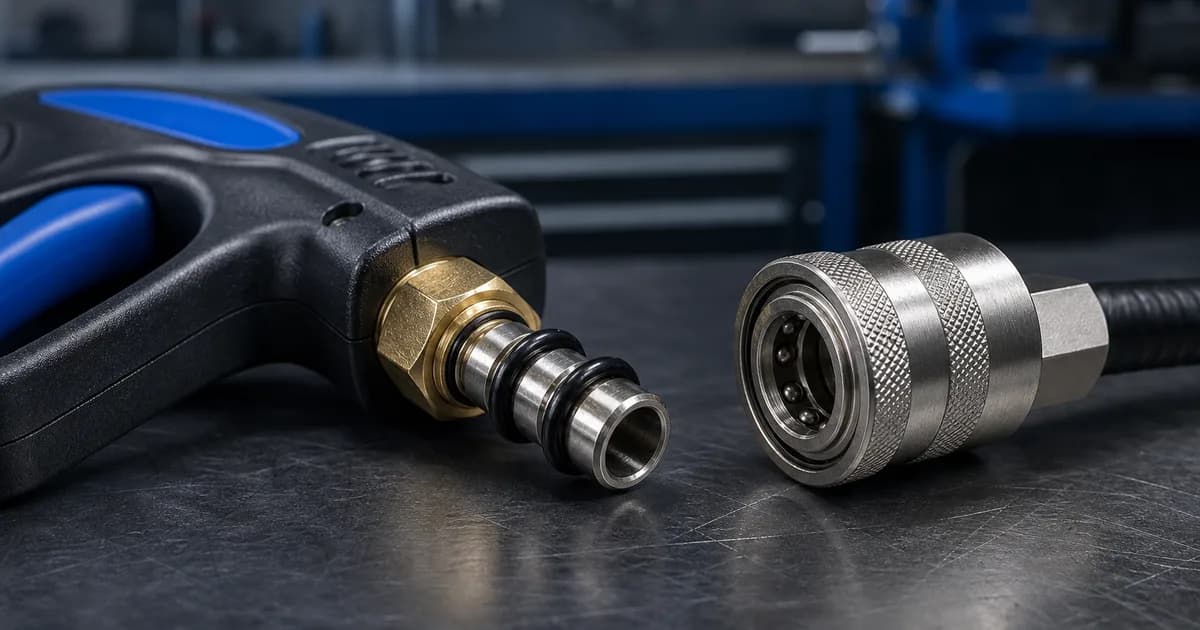
Pressure washers operate at extreme pressures that make every seal critical. From the quick-connect coupler at the spray gun to the high-pressure hose fittings and the pump head itself, O-rings are the unsung heroes that keep water where it belongs. A single degraded seal can drop system pressure, waste water, damage the pump, or injure the operator. This guide covers every sealing point in a pressure washer, the materials that survive cold water, hot water, and chemical detergents, and the common sizes you need to keep your equipment running. **Where O-Rings Are Used in Pressure Washers** Pressure washers contain multiple sealing points, each with different pressure, temperature, and chemical exposure: **Spray wand and trigger gun.** The connection between the trigger gun and the spray wand uses a quick-connect coupler sealed by a small O-ring. This seal sees the full system pressure and must survive repeated connect/disconnect cycles. When this O-ring fails, water sprays from the joint, making the wand unusable and creating a slip hazard. **High-pressure hose fittings.** Both ends of the high-pressure hose use O-rings to seal against the pump outlet and the trigger gun inlet. These seals experience continuous pressure pulsation from the plunger pump and must resist the detergents or bleach that may be drawn through the system. A leaking hose fitting wastes pressure and can damage surrounding surfaces. **Quick-connect couplers.** Quick-connect fittings on pressure washers rely on face-seal O-rings that compress when the male and female halves are locked together. These seals must survive thousands of connect/disconnect cycles without losing resilience. Standard [NBR 70 Shore A](/products/nbr/) is the default, but hot-water units require [EPDM](/products/epdm/) or [FKM](/products/fkm/) compounds. **Pump head.** The pump head contains multiple O-rings around the pistons/plungers, the valves, and the manifold. These are the most demanding seals in the system, seeing pressures up to 250 bar or higher in industrial units, plus heat from friction and hot water. Pump head seals often require harder compounds (90 Shore A) or specialized geometries to prevent extrusion. **Inlet hose and detergent pickup.** Lower-pressure seals on the water inlet and detergent siphon tube use standard O-rings at garden-hose pressure (2-6 bar). These are the easiest to replace but still must resist chlorine bleach and detergents. **Common Sizes Reference Table** Pressure washers use standard AS568 sizes that are readily available in [replacement kits](/products/kits/): | Location | Typical AS568 Sizes | Cross-Section | |---|---|---| | Quick-connect 1/4" | -006, -007, -008, -009, -010, -011 | 1.78 mm | | Spray gun connections | -012, -013, -014, -015, -016 | 1.78 mm | | Pump head seals | -110, -111, -112, -113, -114, -115, -116 | 2.62 mm | | Hose fittings 3/8" | -210, -211, -212 | 3.53 mm | | Inlet/detergent | -113 to -116 | 2.62 mm | Always measure the existing O-ring or consult your pressure washer manual before ordering. Using the wrong size will cause immediate leakage or premature failure. If the original seal is a non-standard size, we can supply custom-cut O-rings from the same materials. **Material Selection: Cold Water vs. Hot Water vs. Chemicals** The operating conditions of your pressure washer determine the best O-ring material: **Cold-water pressure washers (up to 60 degrees C).** Standard [NBR 70 Shore A](/products/nbr/) is the ideal choice. NBR offers excellent resistance to water, good mechanical strength, and low cost. It seals reliably at pressures up to 150 bar in consumer units and 250+ bar in industrial units. NBR also tolerates common pressure-washer detergents and mild bleach solutions. For pump head seals in high-pressure industrial units, NBR 90 Shore A provides better extrusion resistance. **Hot-water pressure washers (60-90 degrees C).** EPDM 70 Shore A is recommended for hot-water and steam-cleaning units. EPDM's saturated polymer backbone resists steam, hot water, and polar solvents far better than NBR. It retains elasticity at temperatures where NBR begins to harden and take compression set. EPDM also resists the alkaline detergents commonly used in commercial cleaning. Note: EPDM is not compatible with petroleum-based pump oils-use it only for water-wetted seals, not crankcase seals. **High-temperature + chemical exposure.** [FKM 75 Shore A](/products/fkm/) (Viton) is the premium choice when hot water combines with aggressive chemicals, acids, or strong bleach. FKM withstands continuous temperatures to +200 degrees C and resists virtually all commercial cleaning chemicals. It is overkill for typical cold-water home use but essential for industrial food-processing cleaners, fleet washers, and chemical-injection systems. **Troubleshooting Leaks and Replacement Steps** If your pressure washer is leaking, follow this systematic diagnosis: **Step 1: Locate the leak.** Run the unit and observe where water escapes. Wand coupler leaks spray outward from the joint. Hose fitting leaks drip from the threaded connection. Pump head leaks may weep from the manifold or spray from the plungers. Inlet leaks are low-pressure drips at the garden hose connection. **Step 2: Depressurize completely.** Shut off the engine or motor, squeeze the trigger to release trapped pressure, and disconnect the water supply. Never attempt to replace seals under pressure. **Step 3: Remove the old O-ring.** Use a small pick or the tip of a flat screwdriver to lift the old seal from its groove. Do not scratch the groove surface-scratches create new leak paths. Inspect the groove for corrosion, cracks, or deformation. A damaged fitting body will destroy any new O-ring. **Step 4: Clean and inspect.** Flush the fitting with clean water and dry it. Check the mating surface for nicks, burrs, or pitting. Polish minor imperfections with fine emery cloth; replace heavily damaged fittings. **Step 5: Install the new O-ring.** Lubricate the new seal with silicone grease or a thin film of compatible oil. Avoid petroleum grease on EPDM. Roll the O-ring into the groove without stretching it excessively-stretching more than 50% can cause permanent deformation and early failure. **Step 6: Reassemble and test.** Reconnect the fitting, tighten to the manufacturer's torque, and run the unit. Check for leaks at operating pressure. A small weep that stops after a few minutes is normal as the O-ring seats; continuous leakage indicates wrong size, damaged groove, or insufficient compression. **Kits and Spare Parts Recommendations** For commercial pressure-washer operators, a [spare parts kit](/products/kits/) is essential insurance against downtime: **Homeowner kit.** Contains O-rings for the spray wand, trigger gun, and both hose ends-typically 6-10 pieces in NBR 70. Keep one kit per pressure washer. **Commercial cold-water kit.** Expands the homeowner kit with pump head seals, inlet seals, and detergent siphon O-rings in NBR 70/90. Usually 15-25 pieces. **Hot-water kit.** Replaces NBR with EPDM for all water-wetted seals, plus a few FKM seals for high-heat zones. Usually 20-30 pieces. **Universal master kit.** Contains NBR, EPDM, and FKM seals in the most common pressure-washer sizes, organized by material and size in a compartment box. Ideal for maintenance shops and fleet operators. Store spare O-rings in a sealed bag away from ozone, UV light, and petroleum vapors. Even unused, NBR will slowly oxidize over 3-5 years; date your kits and rotate stock.
Application Requirements
Recommended Materials
NBR 70 Shore A
Standard material for cold-water pressure washers. Seals wands, hoses, quick-connect couplers and pump heads in consumer and industrial cold-water units up to 150 bar.
Temp: -40 degrees C to +120 degrees C
Best value for cold-water use. Good resistance to detergents and mild bleach. For pump heads above 150 bar, step up to NBR 90 Shore A for extrusion resistance.
NBR 90 Shore A
Pump head seals in high-pressure industrial units above 150 bar. Harder compound resists extrusion into clearance gaps around plungers and valves.
Temp: -30 degrees C to +120 degrees C
Higher extrusion resistance than 70 Shore A but requires better surface finish and groove tolerances. Not recommended for low-pressure static seals where conformability matters more.
EPDM 70 Shore A
Hot-water pressure washers, steam cleaners, and units running above 60 degrees C water temperature. Superior steam and hot-water resistance versus NBR.
Temp: -50 degrees C to +150 degrees C
Do not use with petroleum-based pump oils-EPDM swells in hydrocarbons. Use only for water-wetted seals, not crankcase or oil-wetted seals.
FKM 75 Shore A
High-temperature industrial cleaning with aggressive chemicals, acids, or concentrated bleach. Fleet washers, food-processing equipment, and chemical-injection systems.
Temp: -20 degrees C to +200 degrees C
Premium material where chemical resistance exceeds NBR/EPDM capabilities. Higher cost justified by longer life in aggressive environments. GFLT grades available for -30 degrees C flexibility.
Design Tips
- 1.Replace O-rings at the start of each season for commercial units, or annually for homeowner units. Seals degrade from ozone and heat even when not in use.
- 2.Use silicone grease for lubrication during assembly. Petroleum grease can degrade EPDM and some NBR compounds over time.
- 3.Do not overtighten threaded fittings. Excessive torque crushes the O-ring and permanently deforms it, causing immediate or early leakage.
- 4.Inspect quick-connect couplers for wear on the locking balls and sealing face. A worn coupler will damage a new O-ring within days.
- 5.Flush detergent and bleach from the system after each use. Residual chemicals accelerate chemical attack on all elastomer types.
- 6.Keep spare O-rings in original packaging, sealed, and away from ozone sources like electric motors and fluorescent lights.
- 7.Match the O-ring hardness to the pressure: 70 Shore A for low-to-medium pressure static seals, 90 Shore A for high-pressure pump seals.
- 8.If replacing pump head seals, replace all seals in the head at the same time. Mixing old and new seals creates uneven compression and leakage.
Common Sizes
| Size | Typical Use |
|---|---|
| AS568-006 to -011 | Quick-connect 1/4" couplers on spray wands and trigger guns |
| AS568-012 to -016 | Spray gun connections and M22 threaded hose fittings |
| AS568-110 to -116 | Pump head seals around plungers, valves and manifolds |
| AS568-210 to -212 | 3/8" high-pressure hose end fittings on industrial units |
Frequently Asked Questions
What size O-ring does my pressure washer need?
Most pressure washers use standard AS568 sizes. Quick-connect 1/4" fittings typically use -006 to -011; spray gun and M22 connections use -012 to -016; pump head seals use -110 to -116. The exact size depends on your make and model. Measure the old O-ring's inner diameter and cross-section with calipers, or check your owner's manual. We stock these common sizes in NBR, EPDM, and FKM and can supply custom sizes if your unit uses a non-standard seal.
Why is my pressure washer leaking from the wand connection?
The most common cause is a worn or missing O-ring in the quick-connect coupler. Remove the coupler, inspect the O-ring for cracks, flattening, or missing chunks, and replace it with the correct size. Also inspect the coupler body for scratches or deformation-damage to the sealing face will destroy a new O-ring quickly. Lubricate the new seal with silicone grease before reassembly and ensure the coupler locks fully.
Can I use NBR O-rings in a hot-water pressure washer?
NBR is suitable for water temperatures up to about 60 degrees C. Above that, NBR begins to harden and take compression set, leading to leakage. For hot-water pressure washers (60-90 degrees C), switch to EPDM, which has superior steam and hot-water resistance. For temperatures above 90 degrees C or when using aggressive chemicals, FKM is the safe choice. Using NBR outside its temperature range will cause rapid seal failure and possible pump damage.
How often should I replace pressure washer O-rings?
For commercial daily use, inspect seals monthly and replace them at the first sign of wear, or at least quarterly. For homeowner seasonal use, replace all O-rings annually before the first use of the season. Even when stored, O-rings degrade from ozone exposure and thermal aging. Preventive replacement costs a few dollars; a blown seal during a job can cost hours of downtime and hundreds in pump repairs.
What is the difference between an O-ring kit and buying individual seals?
A kit contains all the common seals for a specific pressure washer model or application, organized by size and location. Kits save time, ensure you have the right sizes on hand, and are typically cheaper than buying individual seals. Individual seals are better when you know exactly what you need, when replacing a single failed seal, or when your unit uses non-standard sizes. We offer both standard kits and custom kits built to your equipment list.
Can I use plumbing O-rings in my pressure washer?
No. Plumbing O-rings are designed for low-pressure water (2-6 bar) and may be made from materials incompatible with pressure-washer detergents or hot water. Pressure-washer O-rings must survive 100-250+ bar, dynamic pressure pulsation, and chemical exposure. Always use seals rated for the pressure, temperature, and chemistry of your application. Our pressure-washer O-rings are manufactured to tighter tolerances and from compounds specifically formulated for high-pressure service.
Why does my pump head leak after replacing the O-rings?
The most likely causes are: wrong size O-ring (too small and it won't seal, too large and it extrudes); damaged groove or plunger surface (scratches create leak paths); incorrect hardness (70 Shore A extrudes under high pressure, use 90 Shore A for pump heads); or uneven torque on the manifold bolts causing distortion. Always replace all pump head seals as a set, clean grooves thoroughly, inspect plungers for scoring, and torque bolts to the manufacturer's specification in a star pattern.
Are your pressure washer O-rings compatible with bleach and detergents?
NBR O-rings tolerate mild household bleach and standard pressure-washer detergents well. For concentrated bleach, strong acids, or caustic cleaners, FKM provides superior chemical resistance. EPDM resists alkaline detergents but can degrade in concentrated bleach. If you are unsure about a specific chemical, contact us with the product name or SDS sheet, and we will verify compatibility with our compound database.
Need pressure washer seals?
We supply NBR, EPDM and FKM O-rings in standard and custom sizes for all pressure washer brands. Kits available. MOQ 1 piece.