
Pneumatic Cylinder O-Rings
Low-friction, fast-response sealing for compressed air cylinders, valves and fittings.
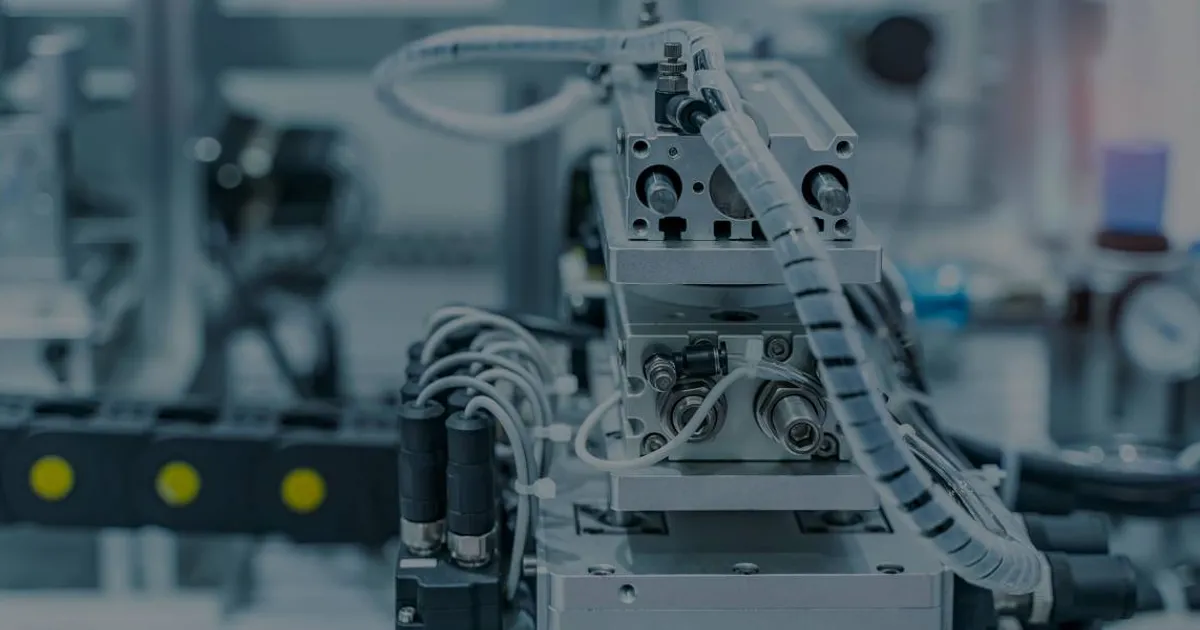
Pneumatic systems operate at lower pressures than hydraulics but demand seals with very low friction, fast response, and resistance to dry running. O-rings in pneumatic cylinders must seal compressed air without sticking or causing jerkiness in cylinder motion. The combination of low lubricity (compressed air carries minimal oil), high cycle rates (pneumatic automation often cycles at 1–5 Hz), and the need for precise positioning makes pneumatic sealing a distinct discipline from hydraulic sealing. NBR 70 Shore A is the most common choice for general pneumatic service due to its low cost, good air sealing properties, and compatibility with standard pneumatic lubricants. For unlubricated or high-cycle systems, polyurethane (PU) offers superior abrasion resistance and lower dynamic friction. FKM is specified for high-temperature pneumatic systems near heat sources. The key to pneumatic seal success is matching the material, hardness, and groove design to the specific operating conditions of the cylinder. Pneumatic cylinder operation presents unique challenges. Unlike hydraulic oil, compressed air provides minimal lubrication, particularly in dry air systems. Without lubrication, the seal runs dry against the cylinder bore, causing increased friction, heat, and wear. Stick-slip (jerky motion caused by static friction exceeding dynamic friction) is a common problem in pneumatic systems, particularly at low speeds. The seal must have low enough friction to allow smooth starting and consistent dynamic friction to prevent hunting. Groove design plays a major role—over-compression increases friction; under-compression causes leakage. Air quality significantly affects seal life. Compressed air contains water vapor (which condenses in the cylinder), compressor oil (which may be incompatible with some seal materials), and particulate contamination from the compressor intake and distribution piping. Moisture causes swelling in some compounds and can promote corrosion of the cylinder bore. Oil carryover from the compressor can cause swelling in EPDM and degradation in some silicone compounds. Particulate contamination scratches the bore and abrades the seal. Proper air preparation—filtration to 5 μm or better, pressure regulation, and lubrication where appropriate—is essential for long seal life. Temperature effects are often underestimated in pneumatic systems. While the compressed air itself may be at ambient temperature, adiabatic heating during compression and frictional heating during cycling can raise seal temperatures significantly. Cylinders operating at high cycle rates (100+ cycles per minute) can experience seal temperatures 20–40°C above ambient due to frictional heating. Cylinders near heat sources (ovens, engines, furnaces) may see continuous temperatures well above the air temperature. FKM becomes necessary when seal temperatures exceed +100°C, even if the compressed air is cool. Common failure modes in pneumatic seals include: spiral failure (twisting and rolling in the groove); abrasion from contaminated air or rough bore surfaces; compression set from frictional heating; extrusion into clearance gaps under pressure spikes; and swelling from compressor oil or moisture. Each failure mode has characteristic visual symptoms that can be used for root cause analysis. Spiral failure shows as a helical cut pattern; abrasion appears as a polished or scored surface; compression set appears as a permanent flat spot. Our pneumatic sealing program includes not just O-ring supply but comprehensive application engineering. We provide groove design recommendations, material selection guidance based on your air quality and operating conditions, failure analysis of returned seals, and custom compounds for unique requirements. All pneumatic O-rings are produced to tight tolerances with 100% visual inspection for surface defects that could cause leakage or friction issues.
Application Requirements
Recommended Materials
NBR
General lubricated pneumatics, valves and fittings. The standard choice for compressed air systems with adequate lubrication. NBR 70 Shore A offers the best combination of low cost, good sealing, and compatibility with standard pneumatic lubricants.
70 Shore A, low-friction grade
Polyurethane (PU)
Unlubricated cylinders, high-cycle automation, rod seals, and any application where maximum wear resistance and low friction are required. PU's exceptional abrasion resistance and tensile strength make it ideal for demanding pneumatic applications.
90 Shore A, high-wear grade
FKM
High-temperature pneumatic systems near engines, ovens, or furnaces where seal temperatures exceed +100°C. FKM maintains its properties and low friction at temperatures where NBR and PU degrade.
75 Shore A, low-friction grade
HNBR
Cleanroom pneumatics, food-grade air systems, and applications where ozone and UV resistance are required. HNBR's saturated backbone resists ozone degradation better than NBR.
70 Shore A
PTFE-Coated NBR
Precision pneumatic positioning systems where stick-slip must be absolutely minimized. The PTFE coating provides extremely low friction while the NBR core provides elasticity and sealing force.
70 Shore A base with PTFE surface coating
Design Tips
- 1.Use 70 Shore A NBR for the lowest friction in standard pneumatic cylinders. Harder compounds increase friction and may cause stick-slip, particularly in small-bore cylinders.
- 2.Keep compression at 10-15% for dynamic pneumatic seals to minimise stick-slip. Higher compression increases friction; lower compression causes leakage during pressure fluctuations.
- 3.Specify polyurethane for unlubricated or high-speed applications above 0.5 m/s. PU's abrasion resistance is 3–5× better than NBR in dry-running conditions.
- 4.Use generously radiused groove corners (R ≥ 0.25 mm) to prevent pinching during fast cycling. Sharp corners damage the seal and create stress concentration points.
- 5.Consider X-Rings (Quad Rings) for bi-directional double-acting pneumatic cylinders. The four-lobe design provides lower friction and better resistance to spiral failure than round O-rings.
- 6.Design for 0.05–0.10 mm clearance between piston and bore to minimize friction while preventing seal extrusion. Excessive clearance causes instability and increased wear.
- 7.Specify FKM for pneumatic systems near heat sources (>+80°C ambient) because frictional heating can raise seal temperature an additional 20–40°C above ambient.
- 8.Install effective air preparation (FRL units) with filtration to 5 μm, pressure regulation, and lubrication for long seal life. Contaminated air is the leading cause of premature seal failure in pneumatics.
Common Sizes
| Size | Typical Use |
|---|---|
| AS568-010 to AS568-050 | Small bore compact cylinders (10–32 mm) |
| AS568-110 to AS568-178 | Standard ISO 15552 pneumatic cylinders (40–100 mm) |
| AS568-210 to AS568-284 | Large bore and rodless cylinders (125–320 mm) |
| Metric ISO 3601 sizes for European pneumatic equipment | General application |
Frequently Asked Questions
What is the best O-ring material for pneumatic cylinders?
NBR 70 Shore A is the standard choice for lubricated pneumatic cylinders. It offers the best combination of low cost, good air sealing, low friction, and compatibility with standard pneumatic lubricants. For unlubricated or high-wear applications, polyurethane (PU) 90 Shore A provides 3–5× better abrasion resistance and lower dynamic friction. For high-temperature applications near heat sources, FKM 75 Shore A maintains its properties to +200°C. The choice depends on operating conditions: NBR for standard lubricated pneumatics; PU for dry-running or high-cycle automation; FKM for temperatures above +100°C; HNBR for ozone-exposed outdoor applications; and PTFE-coated NBR for precision positioning where stick-slip must be minimized. Always consider the complete operating environment including air quality, cycle rate, temperature, and lubrication when selecting pneumatic seal materials.
Can I use hydraulic O-rings in pneumatic cylinders?
Yes, but pneumatic seals generally require lower compression (10-15%) than hydraulic seals (15-20%) to reduce friction and prevent stick-slip motion. Hydraulic O-rings are often 90 Shore A for extrusion resistance, which is harder than necessary for pneumatics and increases friction. Pneumatic systems operate at lower pressure (typically 6–10 bar vs. 100–350 bar for hydraulics), so extrusion is less of a concern. The primary differences are: (1) Pneumatic seals need lower friction for smooth motion; (2) Pneumatic seals must resist dry running; (3) Pneumatic seals operate at higher cycle rates. If using hydraulic O-rings in pneumatics, select softer compounds (70 Shore A NBR) and reduce groove depth to achieve 10–15% compression. For high-cycle applications, consider switching to polyurethane or X-rings for better wear resistance and lower friction.
Why does my pneumatic cylinder jerk or stick?
Stick-slip is usually caused by too much compression, incompatible lubrication, or a seal material with too high friction. Stick-slip occurs when static friction exceeds dynamic friction—the seal 'sticks' until enough pressure builds to break it free, then 'slips' and overshoots, creating a jerky motion. To diagnose: measure compression percentage (target 10–15% for pneumatics); check lubricant compatibility (some synthetic lubricants are incompatible with NBR); verify air quality (moisture and contamination increase friction); and inspect bore surface finish (too smooth or too rough can both cause stick-slip). Solutions include: reducing compression to 10–12%; switching to a lower-friction material (PTFE-coated NBR or X-rings); improving lubrication; using a harder bore material with better surface finish; and adding a dashpot or cushion to slow the cylinder near end-of-stroke. In precision positioning systems, stick-slip can be eliminated by using low-friction seals combined with proportional valves and position feedback.
Are X-Rings good for pneumatic cylinders?
Yes. X-Rings reduce friction and resist spiral failure, making them an excellent upgrade for reciprocating pneumatic cylinder seals. The four-lobe design creates four sealing surfaces compared to two for a round O-ring, distributing the sealing load and reducing unit pressure. This results in 20–30% lower friction than an equivalent O-ring. The grooves between the lobes also retain lubricant better, improving performance in marginally lubricated systems. X-rings are particularly resistant to spiral failure because the lobes stabilize the seal in the groove, preventing the rolling motion that causes spiral twisting. For double-acting cylinders where pressure alternates direction, X-rings provide consistent sealing in both directions without the need for backup rings. The trade-off is slightly higher cost and the need for precise groove dimensions, as X-rings are less forgiving of groove tolerance variation than O-rings.
How does air quality affect pneumatic seal life?
Air quality is the single most important factor in pneumatic seal life after material selection. Three contaminants cause most seal failures: (1) Moisture: water vapor in compressed air condenses in the cylinder, causing corrosion of metal surfaces and swelling of some seal compounds. NBR tolerates moisture well, but prolonged exposure causes surface degradation. (2) Particulates: dust and debris from the compressor intake or distribution piping score the bore and abrade the seal. Particles as small as 10 μm can cause visible wear over millions of cycles. (3) Oil: compressor lubricant carryover can be incompatible with some seal materials. EPDM swells significantly in mineral oil; silicone may degrade in synthetic compressor oils. Proper air preparation—filtration to 5 μm or better, water separation, and appropriate lubrication—is essential. In food-grade or cleanroom applications, use oil-free compressors and specify HNBR or FKM seals that tolerate dry air.
What is the maximum cycle rate for pneumatic O-rings?
Standard NBR O-rings in properly designed grooves can operate at cycle rates up to 5 Hz (300 cycles per minute) in lubricated systems. At these rates, frictional heating becomes significant—seal temperatures can rise 20–40°C above ambient, which must be considered in material selection. For cycle rates above 3 Hz, polyurethane is preferred over NBR due to its superior abrasion resistance and heat dissipation. X-rings also perform better than O-rings at high cycle rates due to lower friction and better lubricant retention. The limiting factor at very high cycle rates is typically not the seal material but the cylinder design—poorly supported pistons, excessive side load, or inadequate lubrication will cause failure regardless of seal material. For ultra-high-speed applications (10+ Hz), specialized low-friction seals with PTFE elements or spring-energized designs may be necessary.
How do I select seals for cleanroom pneumatic systems?
Cleanroom pneumatic systems require seals that do not outgas, shed particles, or degrade in dry, oil-free air. Key requirements: (1) Low outgassing: compounds must not release volatile components that contaminate the cleanroom environment. Platinum-cured silicone and HNBR are preferred. (2) Particle generation: seals must not shed particles during operation. Smooth surface finishes and high-purity compounds are essential. (3) Dry air compatibility: oil-free compressors provide no lubrication, so seals must tolerate dry running. Polyurethane or PTFE-coated compounds are suitable. (4) Cleanroom packaging: seals should be double-bagged in cleanroom-compatible packaging. (5) Color coding: white or translucent seals are preferred to avoid visible contamination. For ISO Class 5 (100) and cleaner environments, specify platinum-cured silicone with cleanroom packaging. For less critical cleanrooms (ISO Class 7–8), HNBR or polyurethane may be acceptable. Always verify outgassing data and particle generation rates with the supplier.
What causes spiral failure in pneumatic O-rings?
Spiral failure in pneumatic cylinders occurs when the O-ring twists and rolls in the groove during reciprocating motion, creating a characteristic helical cut pattern. Causes specific to pneumatics include: insufficient groove width (the seal cannot roll freely and twists instead); low pressure (pneumatic pressure may be insufficient to stabilize the seal against the groove wall); fast cycling (rapid motion prevents the seal from returning to its neutral position); dry running (lack of lubrication causes the seal to grip the bore and twist); and side loading (misalignment creates uneven pressure distribution). To prevent spiral failure: design groove width at 1.15–1.25 × CS; ensure concentric alignment of piston and rod; maintain adequate lubrication; reduce cycle speed if necessary; and consider X-rings, which resist spiral failure due to their four-lobe design. For critical applications, anti-rotation pins or keyways can be added to the groove to prevent rolling.
How often should pneumatic cylinder seals be replaced?
Preventive replacement intervals for pneumatic seals depend on operating conditions. In clean, lubricated systems with good air quality, NBR seals can last 5–10 million cycles (typically 2–5 years in intermittent service). In dry, high-cycle automation, polyurethane seals may last 10–20 million cycles. Warning signs that replacement is needed include: increased air consumption (indicating leakage); reduced cylinder force or speed; visible wear or damage on the seal; and contamination in the exhaust air. Unlike hydraulic systems where leakage is visible, pneumatic leakage is often detected only by increased compressor load or reduced performance. A 1 mm diameter leak at 6 bar consumes approximately 100 L/min of compressed air, significantly increasing energy costs. We recommend establishing replacement intervals based on cycle count monitoring rather than waiting for performance degradation.
Can you supply pneumatic seal kits for OEM cylinder manufacturers?
Yes, we manufacture complete pneumatic seal kits for OEM cylinder manufacturers, containing all O-rings, X-rings, wear rings, and guide rings required for cylinder assembly. Kits are customized to your cylinder specifications and can include: piston seals (O-rings or X-rings), rod seals, static O-rings for end caps, wear rings/guide rings, and assembly lubricant. Each kit is labeled with the cylinder model, serial number range, and bill of materials. We support all pneumatic cylinder standards including ISO 6432 (miniature), ISO 15552 (standard), and ISO 21287 (compact). Production options include: bulk packaging for high-volume assembly lines; individual kits for aftermarket service; and kanban/vendor-managed inventory programs. All components are produced from the same material batch to ensure consistent properties, and each kit includes a certificate of conformance. Custom colors and branding are available for OEM private-label programs.
Request a custom quote
Request pneumatic O-ring samples and sizing guidance