
Pharmaceutical O-Rings for CIP and SIP
USP Class VI silicone and peroxide-cured EPDM for clean-in-place, steam-in-place and bioreactor sealing.
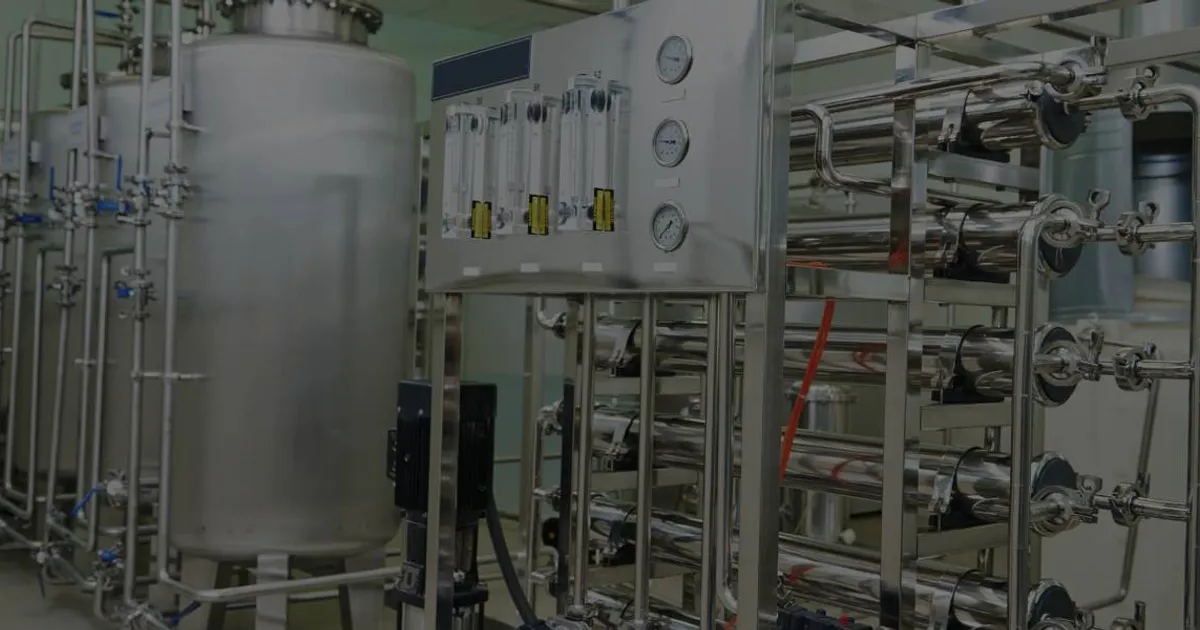
Pharmaceutical manufacturing demands seals that can withstand repeated Clean-in-Place (CIP) and Steam-in-Place (SIP) cycles without degrading, extracting contaminants, or harbouring bacteria. O-rings in bioreactors, filling machines, WFI systems and freeze dryers must be biocompatible, thermally stable and resistant to aggressive cleaning chemistry. Regulatory compliance is not optional—seal materials must meet USP Class VI and FDA 21 CFR 177.2600 requirements, with full documentation supporting validation protocols. We supply platinum-cured VMQ (Silicone) and peroxide-cured EPDM O-rings certified to USP Class VI and FDA 21 CFR 177.2600. Both materials tolerate saturated steam to 134°C and repeated thermal cycling. Our pharmaceutical grades are formulated for low extractables, minimal protein binding, and long service life in validated equipment. All compounds are manufactured under ISO 13485 quality management with full batch traceability and Certificate of Analysis for every lot. The CIP process in pharmaceutical manufacturing is designed to clean equipment without disassembly, using a sequence of pre-rinse, caustic wash, acid wash, and final rinse—often followed by peracetic acid or hydrogen peroxide sanitization. Temperatures range from ambient for pre-rinse to +80°C for caustic and acid cycles. SIP follows CIP with saturated steam at +121°C to +134°C for 15–30 minutes. Seals are exposed to this aggressive thermal and chemical cycling multiple times per week, sometimes daily. The cumulative effect of thousands of cycles causes compression set, surface degradation, and gradual property loss. Material selection and groove design must account for this cumulative damage. Extractables are a primary concern in pharmaceutical seals. Even minute quantities of leachable compounds can contaminate drug products, affecting safety, efficacy, and regulatory compliance. Platinum-cured silicone has the lowest extractables profile because the platinum catalyst produces no by-products and the cure reaction goes to completion. Peroxide-cured EPDM requires thorough post-curing (4–8 hours at +150–+180°C) to remove peroxide decomposition products. We provide extractables data using water, isopropanol, and hexane extraction media, with analysis by GC-MS and ICP-MS. For critical applications, we can perform drug-product-specific extractables studies. Microbial control is equally important. Seal grooves must be designed to avoid dead volumes where cleaning solutions cannot penetrate and bacteria can proliferate. Surface finish of the groove should be Ra ≤ 0.8 μm to prevent bacterial adhesion. Seals should be positioned so that CIP spray balls achieve direct impingement on all seal surfaces. Color-coded seals (blue for EPDM, white or translucent for silicone) support visual verification during assembly and inspection. Metal-detectable grades are available for additional foreign body control in high-care applications. Common failure modes in pharmaceutical seals include: compression set from repeated steam exposure, causing leakage during cool-down; chemical attack from peracetic acid or hydrogen peroxide oxidizing the polymer; surface cracking from thermal shock between +80°C CIP and +134°C SIP; and particulate generation from degraded seal surfaces entering the product stream. Each failure mode can cause batch rejection, equipment downtime, and regulatory observation. Our pharmaceutical sealing program goes beyond material supply to include validation support, groove design consultation, and extractables testing. We provide comprehensive documentation packages including USP Class VI certificates, FDA compliance declarations, batch traceability records, extractables profiles, and sterilization compatibility statements. Our engineering team supports IQ/OQ/PQ validation protocols and can provide reference samples for customer validation runs.
Application Requirements
Recommended Materials
VMQ (Silicone)
Bioreactors, filling needles, freeze dryers, medical tubing, and any application requiring the lowest possible extractables. Platinum-cured silicone is the gold standard for drug-contact and implantable-device assembly due to its virtually zero residual catalyst content.
Platinum-cured USP Class VI
EPDM
Hot WFI systems, CIP manifolds, steam traps, and applications requiring excellent steam resistance combined with cost-effectiveness. EPDM's saturated backbone provides superior hot water and steam resistance compared to silicone in long-term service.
Peroxide-cured FDA grade
FFKM
Aggressive solvent CIP with ketones or esters, ultra-high temperature SIP above +150°C, and critical seals where any failure would require batch rejection. FFKM provides the ultimate chemical and thermal resistance for the most demanding pharmaceutical processes.
USP Class VI steam grade
FVMQ (Fluorosilicone)
Applications requiring both silicone's low extractables and fluorocarbon's solvent resistance. Useful for equipment that contacts both aqueous drug products and silicone-compatible lubricants or cleaning solvents.
Platinum-cured, USP Class VI
Metal-Detectable EPDM
High-care pharmaceutical production where foreign body control is critical. Ferromagnetic fillers trigger standard metal detectors if seal fragments enter the product stream, providing an additional safety layer beyond visual inspection.
Peroxide-cured, FDA grade
Design Tips
- 1.Use platinum-cured silicone rather than sulfur-cured for the lowest extractables. Sulfur-cured silicone can leave accelerator residues that migrate into drug products and affect stability.
- 2.Specify peroxide-cured EPDM for hot water and steam service above 120°C. Silicone has limited steam resistance above +130°C unless specifically formulated with steam-resistant additives.
- 3.Design grooves with 20–25% compression to compensate for thermal expansion during SIP while maintaining sealing force during cool-down.
- 4.Avoid NBR and standard FKM in repeated steam service unless specifically validated. NBR hardens and cracks above +100°C steam. FKM swells in wet steam and loses properties.
- 5.Use blue or white coloured seals for visual detection during assembly and inspection. Color coding helps prevent material mix-ups and supports HACCP programs.
- 6.Eliminate dead volumes in seal grooves where cleaning solutions cannot penetrate. Use hygienic groove designs with smooth radii and no sharp corners.
- 7.Specify Ra ≤ 0.8 μm surface finish for seal grooves to minimize bacterial adhesion and support cleanability validation.
- 8.Validate seal performance after the maximum expected number of CIP/SIP cycles, not just after initial installation. Cumulative damage from thousands of cycles is the primary life-limiting factor.
Common Sizes
| Size | Typical Use |
|---|---|
| Tri-Clamp ferrule seals: 1/2" to 4" | Standard sanitary sizes for bioreactors, vessels, and transfer lines |
| AS568-006 to AS568-050 | Small instrument seals for sensors, gauges, and sampling ports |
| AS568-110 to AS568-178 | Valve and pump seals in pharmaceutical processing equipment |
| Custom sizes for single-use bioreactor housings | General application |
Frequently Asked Questions
What is USP Class VI?
USP Class VI is a United States Pharmacopeia standard for plastics and elastomers used in medical and pharmaceutical applications. It involves three biological tests: intracutaneous reactivity (skin irritation in rabbits), systemic toxicity (mouse injection), and implantation (rabbit muscle). A material passes USP Class VI if it produces no significant biological reaction in any of the three tests. The testing involves extracting the material in specific media (sodium chloride injection, alcohol in sodium chloride, polyethylene glycol, and vegetable oil) and injecting the extracts into test animals. While USP Class VI is widely referenced, it represents a baseline biocompatibility screen. For higher-risk applications (implantable devices, prolonged drug contact), a full ISO 10993 evaluation may be required in addition to USP Class VI. Our USP Class VI compounds are tested by ISO 17025 accredited laboratories with full test reports provided.
Can FKM be used in pharmaceutical steam autoclaves?
Standard FKM has limited steam resistance and is generally not recommended for repeated SIP cycles. While FKM is outstanding for hydrocarbon and chemical resistance, the combination of high temperature and water molecules in saturated steam attacks the vinylidene fluoride units, causing swelling, loss of tensile strength, and surface blistering. After 10–20 steam cycles at +134°C, standard FKM typically shows visible surface degradation and increased compression set. For aggressive chemical CIP combined with occasional steam, a steam-resistant FFKM grade may be suitable, as FFKM's fully fluorinated backbone resists both chemicals and steam. However, FFKM is significantly more expensive than EPDM or silicone. For standard pharmaceutical CIP/SIP, peroxide-cured EPDM remains the most cost-effective and reliable choice for steam exposure, while platinum-cured silicone is preferred for the lowest extractables.
Why is peroxide-cured EPDM preferred over sulfur-cured for pharma?
Peroxide curing produces fewer extractable by-products and better heat resistance than sulfur curing, making peroxide EPDM the standard for food and pharmaceutical steam applications. Sulfur curing uses organic accelerators (thiurams, mercaptobenzothiazole, guanidines) that can leave residues in the finished compound. These residues can: migrate into drug products and affect stability; cause taste and odor contamination; and trigger cytotoxicity in cell culture applications. Peroxide curing uses organic peroxides (dicumyl peroxide, 2,4-dichlorobenzoyl peroxide) that decompose to form free radicals, creating carbon-carbon crosslinks without accelerator residues. While peroxide decomposition products (cumyl alcohol, benzoic acid derivatives) are present, they are more easily removed by post-curing and generally have lower biological reactivity than sulfur accelerator residues. Peroxide-cured EPDM also has better compression set resistance at elevated temperature, which is critical for repeated SIP cycles.
Do you provide certificates of conformance?
Yes. Every pharmaceutical order is supplied with a comprehensive documentation package including: Certificate of Conformance stating compliance with USP Class VI and FDA 21 CFR 177.2600; Certificate of Analysis with batch-specific test data (hardness, tensile strength, elongation, compression set); Material Safety Data Sheet (SDS); batch traceability record linking raw material lots to finished parts; extractables profile; sterilization compatibility statement; and ISO 13485 manufacturing declaration. Third-party test reports from ISO 17025 accredited laboratories are available on request. All documentation is provided in PDF format with digital signatures and is suitable for inclusion in regulatory submissions, validation protocols, and supplier qualification files. We can also provide customized documentation templates to match your specific quality system requirements.
How long do pharmaceutical seals last in CIP/SIP service?
In typical pharmaceutical CIP/SIP service (daily cycles at +134°C), peroxide-cured EPDM seals last 1–3 years, while platinum-cured silicone seals last 2–4 years. Actual service life depends on: cleaning chemistry (peracetic acid is more aggressive than steam alone); cycle frequency (daily vs. weekly); groove design (over-compression accelerates compression set); and operating pressure (pressure cycling adds mechanical fatigue). Seals in WFI systems with lower temperature and less aggressive cleaning may last 5+ years. Warning signs of end-of-life include: leakage during cool-down (compression set); visible surface cracking or hardening; increased extractables; and particulate generation. Preventive replacement based on cycle count (typically 500–1,000 cycles for EPDM, 1,000–2,000 for silicone) is the best practice to avoid unplanned downtime and batch rejection.
What extractables testing do you provide?
We provide comprehensive extractables profiling per USP 1663 and ISO 10993-17. Our standard pharmaceutical extractables package includes: extraction in USP purified water (polar extractables) at +50°C for 72 hours; extraction in isopropanol (semi-polar extractables) at +50°C for 72 hours; extraction in hexane (non-polar extractables) at +50°C for 72 hours. Extracts are analyzed by GC-MS for organic compounds, ICP-MS for elemental impurities, and FTIR for polymer fragments. Results are reported with compound identification and semi-quantitative concentration. For drug-specific applications, we can perform customized extractions using the actual drug product or a validated simulant, followed by analysis for compounds of concern. All extractables studies include a toxicological risk assessment per ISO 10993-17 to evaluate the safety significance of detected compounds. Extractables data is updated annually or whenever the compound formulation changes.
Can you support validation protocols (IQ/OQ/PQ)?
Yes, we provide comprehensive support for pharmaceutical equipment validation. For Installation Qualification (IQ), we supply material certificates, dimensional reports, and surface finish verification. For Operational Qualification (OQ), we provide reference samples for inclusion in your validation runs, with pre-test property measurements and recommended acceptance criteria. For Performance Qualification (PQ), we can supply pre-conditioned seals that have been exposed to your expected CIP/SIP cycle count, allowing you to evaluate seal condition after representative service life. Our engineering team can review your groove designs for cleanability and validate them against ASME BPE guidelines. We also provide technical memos on seal material selection, installation procedures, and preventive maintenance intervals that can be included in your standard operating procedures. All validation support is documented and traceable.
What is the difference between platinum-cured and peroxide-cured silicone for pharma?
Platinum-cured silicone uses a platinum-vinyl complex catalyst that promotes an addition reaction between vinyl groups and Si-H groups. This reaction produces no by-products and goes essentially to completion, resulting in extremely low extractables and no residual catalyst. Peroxide-cured silicone uses organic peroxides that decompose to form free radicals, which abstract hydrogen and form carbon-carbon crosslinks. Peroxide decomposition leaves residues (benzoic acid derivatives, acetophenone, cumyl alcohol) that require extended post-curing (4–8 hours at +200°C) to reduce to acceptable levels. For pharmaceutical applications, platinum-cured silicone is preferred because: extractables are 5–10× lower than peroxide-cured; there is no risk of peroxide residue affecting drug stability; clarity is better (important for visual inspection); and odor is minimal. The trade-off is that platinum-cured silicone is more expensive and requires stricter processing controls to prevent platinum catalyst poisoning.
How do I prevent microbial growth in seal grooves?
Preventing microbial growth requires both material selection and groove design. Material factors: use compounds without nutrient sources (some plasticizers and processing aids can support bacterial growth); select materials with smooth, non-porous surfaces; and consider antimicrobial additives for critical applications. Groove design factors: eliminate dead volumes and crevices where cleaning solution cannot penetrate; ensure CIP spray balls achieve direct impingement on all seal surfaces; design grooves with drain paths to prevent liquid accumulation; maintain surface finish Ra ≤ 0.8 μm to minimize bacterial adhesion; and position seals in accessible locations for visual inspection. Operational factors: validate CIP coverage using riboflavin testing or similar methods; maintain CIP chemistry concentration and temperature within validated ranges; and establish preventive replacement schedules to remove worn seals before they develop surface irregularities that harbor bacteria.
Do you offer cleanroom packaging for pharmaceutical seals?
Yes, we offer multiple levels of cleanroom packaging for pharmaceutical applications. Standard pharmaceutical packaging includes: double-bagged in polyethylene pouches; nitrogen purge to prevent oxidation; and labeling with batch number, material specification, and expiration date. Enhanced cleanroom packaging includes: production and packaging in ISO Class 7 (10,000) cleanroom; particulate cleaning with USP purified water; and packaging in nitrogen-purged, heat-sealed bags with particle counts verified by liquid particle counter. For the most critical applications, we can arrange ISO Class 5 (100) packaging through certified partners. All cleanroom packaging includes a certificate of cleanroom processing with particle count data. We also offer gamma sterilization of packaged seals for applications requiring terminal sterilization. Custom packaging configurations (tray packs, reel packs, individual pouches) are available to support automated assembly processes.
Request a custom quote
Request USP Class VI O-ring samples and certificates