
Oil-Resistant O-Ring Selection Guide
Hydraulic fluid, lubricating oil and synthetic lubricant sealing. Material guide for industrial machinery and mobile equipment.
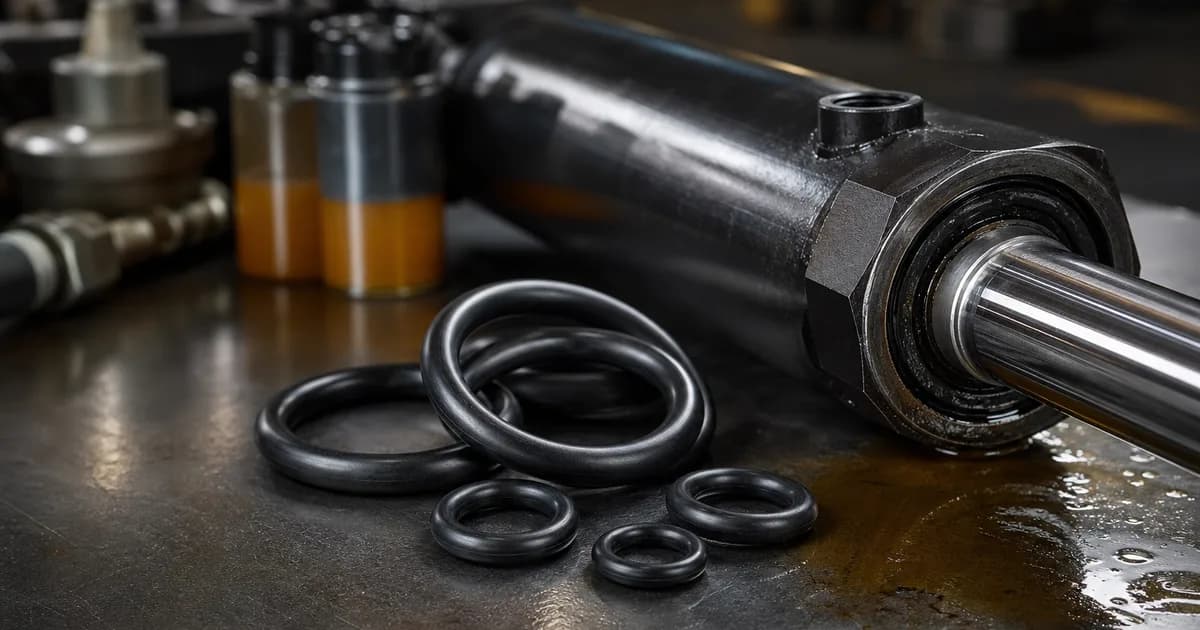
Oil-resistant O-rings are the most commonly specified seals in industrial applications. Petroleum-based hydraulic fluids, lubricating oils, and synthetic lubricants require different elastomer chemistries depending on temperature, pressure, and fluid additives. This guide matches oil types to the optimal O-ring material. **Oil type compatibility summary:** | Oil / Fluid Type | Best Materials | Temperature Limit | Notes | |---|---|---|---| | Mineral hydraulic oil (ISO VG 32–68) | [NBR 70A](/products/nbr/), [PU 80A](/products/pu/) | NBR +120°C; PU +80°C | NBR is the default; PU for dynamic | | Synthetic hydrocarbon (PAO) | [NBR 70A](/products/nbr/), [FKM 75A](/products/fkm/) | FKM +200°C | NBR compatible with most PAO | | Synthetic ester (HEES bio-oil) | [HNBR 80A](/products/hnbr/), [FKM 75A](/products/fkm/) | HNBR +150°C | NBR attacked by esters | | Polyol ester (POE refrigeration) | [FKM 75A](/products/fkm/), [HNBR 80A](/products/hnbr/) | FKM +200°C | Common in refrigeration | | Phosphate ester (Skydrol) | [EPDM 70A](/products/epdm/), [FKM 75A](/products/fkm/) | EPDM +150°C | EPDM is standard for Skydrol | | Silicone oil / grease | [NBR 70A](/products/nbr/), [FKM 75A](/products/fkm/) | All compatible | Universal compatibility | | PAG synthetic oil | [NBR 70A](/products/nbr/), [HNBR 80A](/products/hnbr/) | HNBR +150°C | Automotive and compressor | **Hydraulic system material selection:** For **standard mineral oil hydraulic systems** operating below +100°C, [NBR 70 Shore A](/products/nbr/) is the industry standard and most cost-effective choice. It provides adequate oil resistance, good mechanical properties, and broad availability. For pressures above 25 MPa or large clearance gaps, specify NBR 90 Shore A or add PTFE backup rings. For **high-temperature hydraulics** (+100°C to +150°C), [HNBR 80 Shore A](/products/hnbr/) replaces NBR. HNBR's saturated backbone resists thermal oxidation and maintains compression set resistance at temperatures where NBR hardens and leaks. HNBR is also required for synthetic ester-based biodegradable hydraulic fluids (HEES). For **extreme-temperature hydraulics** above +150°C or with aggressive synthetic fluids, [FKM 75 Shore A](/products/fkm/) is the upgrade. FKM handles phosphate ester fluids (Skydrol), polyol esters, and aromatic hydraulic fluids that attack NBR and HNBR. For **dynamic hydraulic seals** (rods, pistons, wipers) in reciprocating service, [PU 80–90 Shore A](/products/pu/) provides the best abrasion resistance, tear strength, and extrusion resistance. PU achieves 5–10× longer service life than NBR in contaminated hydraulic environments. Use polyether (EU) PU for wet or water-glycol hydraulic systems. For a detailed oil compatibility search, use our [Chemical Compatibility Tool](/tools/chemical-compatibility/).
Application Requirements
Recommended Materials
NBR 70 Shore A
General-purpose mineral oil hydraulic and lubricating oil sealing. The default material for 80% of industrial oil applications.
Temp: -40°C to +120°C
Standard for mobile and industrial hydraulics. Use 90 Shore A for high pressure without backup rings. Not for synthetic esters or phosphate esters.
HNBR 80 Shore A
High-temperature hydraulics, bio-oils (HEES), sour gas environments, and automotive oil systems above +100°C.
Temp: -40°C to +150°C
Superior to NBR for synthetic esters and oxidative environments. Saturated backbone provides ozone and abrasion resistance.
FKM 75 Shore A
Extreme-temperature hydraulics, phosphate ester fluids (Skydrol), and aggressive synthetic lubricants above +150°C.
Temp: -20°C to +200°C
Handles aromatics, acids, and most aggressive fluids. GFLT grade for low-temp flexibility to -40°C. Not for hot water or steam.
PU 80–90 Shore A
Dynamic hydraulic rod and piston seals, wipers, and high-abrasion environments. Best wear resistance of any elastomer.
Temp: -35°C to +80°C
5–10× longer life than NBR in reciprocating service. Use polyether (EU) grade for wet or water-glycol systems. Not for hot water or steam.
EPDM 70 Shore A
Phosphate ester hydraulic fluids (Skydrol, HFD-R), water-glycol (HFC), and polar synthetic fluids.
Temp: -50°C to +150°C
Standard for aircraft hydraulics using Skydrol. Not compatible with mineral oil or petroleum hydraulic fluids — severe swell.
Design Tips
- 1.Verify hydraulic fluid type before selecting O-ring material — 'hydraulic oil' is not specific enough. Mineral oil, synthetic ester, and phosphate ester require different elastomers.
- 2.For bio-hydraulic fluids (HEES, HETG), specify HNBR or FKM — standard NBR is attacked by synthetic esters.
- 3.Dynamic hydraulic seals in contaminated environments last 5–10× longer in PU than NBR — the abrasion resistance premium pays for itself.
- 4.Use PTFE backup rings at pressures above 150 bar or when clearance gaps exceed 0.1 mm — extrusion is the leading cause of hydraulic seal failure.
- 5.Target 10–15% compression for dynamic rod and piston seals; 15–20% for static flange seals in hydraulic systems.
- 6.For water-glycol hydraulic fluids (HFC), specify EPDM — NBR swells excessively in glycol.
- 7.Maintain hydraulic fluid cleanliness to ISO 4406 18/16/13 or better — particle contamination causes abrasive seal wear regardless of material.
- 8.Replace hydraulic cylinder seals preventively based on operating hours, not just when leaking — contamination ingress from a leaking seal damages the entire hydraulic system.
Common Sizes
| Size | Typical Use |
|---|---|
| AS568-006 to -022 | Small hydraulic fittings, gauge ports, valve seals |
| AS568-110 to -160 | Medium hydraulic cylinders, rod and piston seals |
| AS568-210 to -260 | Large bore hydraulic cylinders, press seals |
| AS568-325 to -341 | Heavy equipment and industrial press cylinders |
Frequently Asked Questions
What is the best O-ring material for hydraulic oil?
NBR 70 Shore A is the standard for petroleum-based mineral hydraulic oils (ISO VG 32–68) below +100°C. For temperatures above +100°C, upgrade to HNBR. For synthetic ester bio-oils, use HNBR or FKM. For phosphate ester fluids (Skydrol), use EPDM. For water-glycol (HFC), use EPDM. For dynamic reciprocating seals, PU provides the longest service life.
Can I use NBR O-rings with synthetic hydraulic fluid?
It depends on the synthetic type. NBR is compatible with PAO (polyalphaolefin) synthetic hydrocarbons. NBR is attacked by synthetic esters (HEES bio-oils, POE refrigeration oils) — specify HNBR or FKM instead. NBR is not compatible with phosphate esters (Skydrol) — use EPDM. Always verify the specific synthetic fluid formulation before selecting the seal material.
What hardness O-ring should I use for hydraulic sealing?
For hydraulic cylinder seals at 15–25 MPa, 70 Shore A is standard. For 25–40 MPa, 80–90 Shore A improves extrusion resistance. Above 40 MPa, use 90 Shore A with PTFE backup rings. In dynamic reciprocating service, PU at 80–90 Shore A is preferred over NBR for abrasion resistance. Harder is not always better — harder compounds have lower conformability and require better surface finish and tighter tolerances.
How do I prevent hydraulic O-ring extrusion?
Extrusion is prevented by: (1) Using harder O-ring material (90 Shore A vs 70 Shore A); (2) Reducing diametral clearance gap to ≤ 0.05 mm for high pressure; (3) Installing PTFE anti-extrusion backup rings on the low-pressure side; (4) Ensuring concentric alignment of rod and bore to avoid side loading; (5) Filtering hydraulic fluid to ISO 4406 18/16/13 to minimize abrasive wear that enlarges clearance gaps over time.
Need oil-resistant O-rings?
We supply NBR, HNBR, FKM, PU and EPDM O-rings for hydraulic fluid and lubricating oil applications. Standard and custom sizes. MOQ 1 piece.