
Oil & Gas Sealing: Downhole, BOP and Sour Gas
HNBR and FKM O-rings engineered for HPHT wells, sour service and blowout preventer sealing.
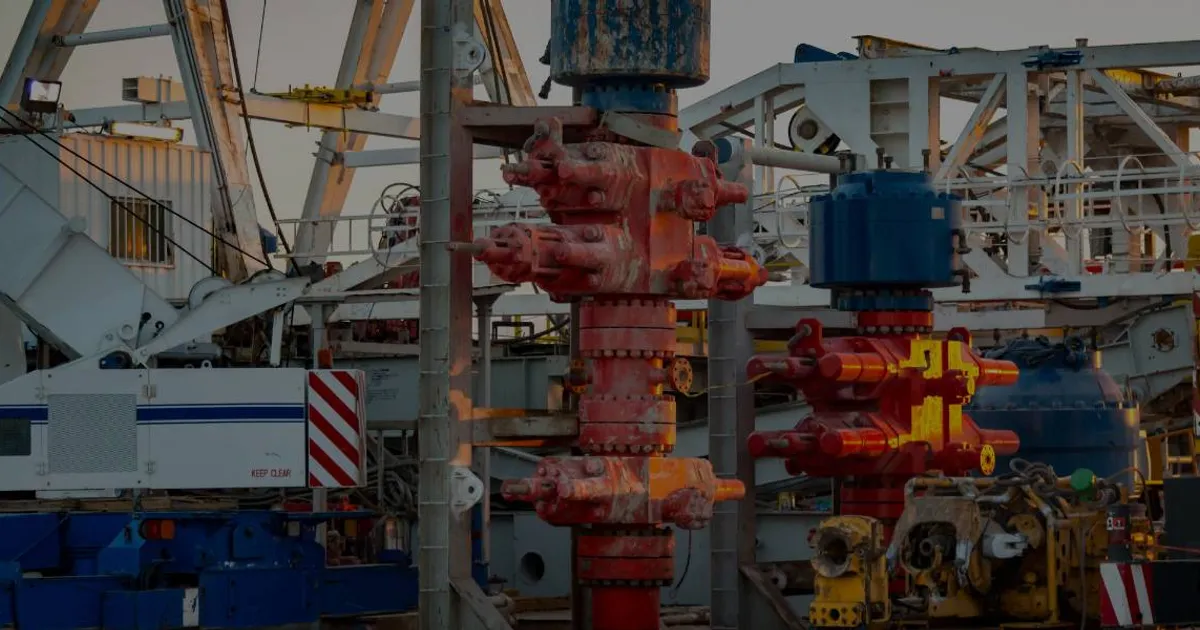
Oil and gas sealing is one of the most punishing environments for elastomers. Downhole tools encounter high pressure, high temperature (HPHT), hydrogen sulfide (H2S), CO2, and aromatic hydrocarbons. Blowout preventers (BOP) and wellhead equipment demand seals that must not fail under emergency pressure conditions. A single seal failure in a BOP can have catastrophic environmental and safety consequences, making material selection and quality assurance absolutely critical. We supply NACE MR0175 / ISO 15156 compliant HNBR and high-fluorine FKM O-rings for sour gas and HPHT applications. These compounds are formulated to resist rapid gas decompression (RGD), thermal aging, and chemical attack while maintaining the extrusion resistance needed for 300+ bar pressures. All materials are batch-tested for hardness, tensile properties, and compression set, with full traceability from raw material through finished part. Sour gas (H2S-containing) environments present unique challenges. Hydrogen sulfide is corrosive to metals and can cause sulfide stress cracking (SSC) in high-strength steels. For elastomers, H2S can cause swelling, hardening, and loss of physical properties. NBR is particularly susceptible to H2S attack because the nitrile groups react with sulfide ions. HNBR, with its saturated backbone, offers dramatically improved H2S resistance and is the standard for sour service. The NACE MR0175 / ISO 15156 standard specifies maximum hardness limits (typically 87 HRHD or 23 HRC equivalent for metals) to prevent SSC, and while this primarily addresses metallic components, the seal material must also be validated for H2S compatibility at the expected concentration and temperature. High-pressure, high-temperature (HPHT) wells operate at pressures exceeding 700 bar (10,000 psi) and temperatures above +150°C. At these conditions, even small clearance gaps become critical extrusion paths. Standard O-ring compounds extrude into gaps as small as 0.05 mm under 700 bar pressure. HPHT seals require: high hardness (90 Shore A minimum); PTFE or PEEK backup rings; minimal clearance gaps (0.02–0.05 mm); and materials with excellent compression set resistance to maintain sealing force over long service intervals. Thermal expansion must also be considered—elastomers expand significantly more than steel at HPHT conditions, and groove fill must be designed accordingly. Rapid gas decompression (RGD) is a failure mode unique to gas wells. When high-pressure gas diffuses into the elastomer during production and then decompresses rapidly (during well shut-in or tool retrieval), the dissolved gas forms blisters within the polymer matrix. These blisters crack the seal from the inside out, causing catastrophic failure. RGD-resistant compounds are formulated with lower gas permeability and better adhesion between polymer and filler to resist blister formation. HNBR compounds specifically designed for RGD resistance can withstand decompression rates of 20–50 bar/minute from 700 bar, compared to standard compounds that fail at 5–10 bar/minute. Chemical exposure in oil and gas production includes: crude oil (aliphatic and aromatic hydrocarbons); produced water (saline, often containing dissolved H2S and CO2); completion fluids (brines, acids, methanol); and injection fluids (CO2, polymers, surfactants). Each of these can attack seal materials. Crude oil aromatics swell NBR; CO2 forms carbonic acid in water that attacks some compounds; methanol causes embrittlement in certain elastomers. Material selection must consider the full range of chemicals the seal will encounter over its service life. Our oilfield sealing program includes comprehensive material qualification per API and NACE standards. We provide NACE MR0175 compliance letters, hardness test reports, batch traceability records, and third-party RGD test reports. Custom compounds can be developed for specific well conditions, with full laboratory validation including immersion testing in actual well fluids at downhole temperature and pressure.
Application Requirements
Recommended Materials
HNBR
Sour gas wellheads, downhole packers, BOP seals, and any application involving H2S exposure at high pressure. HNBR's saturated backbone provides superior resistance to H2S, amine corrosion inhibitors, and thermal aging compared to NBR.
NACE MR0175 compliant, 90 Shore A, RGD-resistant
FKM
High-temperature aromatic fuel service, CO2 injection wells, and applications where crude oil aromatic content is high and temperatures exceed +150°C. Type 2 FKM contains 68–70% fluorine for maximum chemical resistance.
High-fluorine Type 2, 90 Shore A
FFKM
Ultra-HPHT wells above +200°C, methanol injection systems, extreme chemical exposure, and any application where standard HNBR or FKM is inadequate. FFKM provides the ultimate chemical and thermal resistance for the most demanding downhole conditions.
High-temp oilfield grade, 80-90 Shore A
AFLAS (TFE/P)
Amine-based corrosion inhibitor service, high-pH completion fluids, and applications where both hydrocarbons and strong bases are present. AFLAS offers better base resistance than FKM and better oil resistance than EPDM.
Base-resistant fluoroelastomer, 80-90 Shore A
PTFE + Spring-Energized
Ultra-high pressure static seals above 700 bar, cryogenic gas seals, and applications where elastomeric seals cannot survive the pressure-temperature combination. Spring energization provides the sealing force that PTFE lacks.
Bronze-filled or carbon-filled PTFE with Inconel spring
Design Tips
- 1.Use 90 Shore A hardness for all high-pressure oilfield seals to maximise extrusion resistance. Softer compounds will extrude into clearance gaps at pressures above 200 bar regardless of backup ring configuration.
- 2.Install PTFE backup rings for pressures above 200 bar or clearance gaps greater than 0.10 mm. Bronze-filled PTFE provides the highest extrusion resistance for BOP and wellhead applications.
- 3.Specify RGD-resistant HNBR for gas wells to prevent blistering during decompression. Standard HNBR may fail within a few decompression cycles; RGD grades are formulated specifically for this failure mode.
- 4.Allow for thermal expansion in HPHT grooves — keep groove fill below 80% at ambient temperature to accommodate expansion at +150°C.
- 5.Use bronze-filled PTFE backup rings for the highest extrusion resistance in BOP seals. The bronze filler improves wear resistance and thermal conductivity compared to virgin PTFE.
- 6.Design groove corners with radii of 0.1–0.25 mm to prevent stress concentration and pinching during high-pressure extrusion.
- 7.Specify metal-to-metal backup for critical wellhead flanges. In HPHT wellheads, O-rings are often used as secondary seals with metal ring gaskets as the primary pressure boundary.
- 8.Validate seal compounds with actual well fluids at downhole temperature and pressure. Laboratory tests with standard test fluids may not accurately predict performance in complex produced fluids containing aromatics, H2S, CO2, and brine.
Common Sizes
| Size | Typical Use |
|---|---|
| AS568-325 to AS568-395 | Large wellhead and BOP seals |
| AS568-210 to AS568-284 | Downhole tool and valve seals |
| Custom sizes for packer elements and mandrel seals | General application |
| Vulcanised large-diameter rings for tank manways and access hatches | General application |
Frequently Asked Questions
What does NACE MR0175 mean?
NACE MR0175 / ISO 15156 is the international standard for materials used in H2S-containing (sour) oil and gas production environments. It defines hardness limits and material requirements to prevent sulfide stress cracking (SSC) in metallic components and specifies material qualification requirements for elastomers. For elastomeric seals, NACE MR0175 requires: H2S compatibility testing at the expected concentration and temperature; hardness within specified limits (typically 70–90 Shore A); and documented material properties including tensile strength, elongation, and compression set. The standard covers three parts: Part 1 (general principles for cracking-resistant materials), Part 2 (cracking-resistant carbon and low-alloy steels), and Part 3 (cracking-resistant CRAs and other alloys). While primarily focused on metals, the principles of H2S compatibility extend to elastomers, and major operators require NACE-compliant seals for sour service. We provide NACE compliance letters with full test data for all oilfield compounds.
Is HNBR or FKM better for sour gas?
HNBR is generally preferred for sour gas (H2S) service due to its superior resistance to hydrogen sulfide. HNBR's saturated hydrocarbon backbone does not contain the reactive nitrile groups found in NBR that react with H2S to form thioamides and cause embrittlement. HNBR maintains its physical properties in H2S concentrations up to 15% at temperatures to +150°C. FKM can be used in sour gas at moderate temperatures and H2S concentrations but is generally not recommended for high H2S (>5%) at elevated temperature. FKM's strength lies in aromatic hydrocarbon resistance and high-temperature capability, making it better suited for sweet crude oil service above +150°C. For sour gas above +150°C, FFKM may be required, as it combines the H2S resistance of HNBR with the temperature capability of FKM. In practice, most sour gas applications use HNBR for the seal body with PTFE backup rings for extrusion resistance.
What is rapid gas decompression (RGD) resistance?
RGD resistance is the ability of an elastomer to withstand blistering and cracking when high-pressure gas diffuses into the seal and then decompresses rapidly. In gas wells, seals are exposed to methane, CO2, and H2S at pressures of 200–700 bar. Over time, gas dissolves into the elastomer matrix. When pressure is released rapidly (during well shut-in, tool retrieval, or emergency blowout), the dissolved gas comes out of solution and forms blisters within the polymer. These blisters create internal cracks that propagate to the seal surface, causing leakage and failure. RGD-resistant compounds are formulated with: lower gas permeability (less gas uptake); better filler-polymer adhesion (resists blister growth); and optimized cure systems (more uniform crosslink density). The NORSOK M-710 standard provides a test method for RGD resistance, measuring seal condition after decompression from specified pressure at specified rates. Our RGD-resistant HNBR compounds pass NORSOK M-710 testing at 150 bar decompression from 700 bar.
Can you supply material certificates for oilfield O-rings?
Yes. We provide comprehensive material certification for oilfield O-rings including: NACE MR0175 / ISO 15156 compliance letters; hardness test reports ( Shore A, IRHD); tensile strength and elongation test reports; compression set data at elevated temperature; batch traceability records linking raw material lots to finished parts; third-party RGD test reports per NORSOK M-710; immersion test reports in crude oil, brine, and H2S environments; and ISO 17025 accredited test reports on request. All certificates include the batch number, date of manufacture, test dates, and testing laboratory information. For critical applications, we can arrange witnessed testing at independent laboratories (Element, Exova, Intertek) with direct reporting to the operator. We also support supplier qualification audits and can provide reference customer contacts for independent verification of our quality systems.
What is the maximum pressure for O-ring seals in downhole tools?
O-ring seals can be designed for static pressures up to 700 bar (10,000 psi) and dynamic pressures up to 400 bar with proper groove design, material selection, and backup rings. At these pressures, several design factors become critical: (1) Material hardness must be 90 Shore A minimum to resist extrusion; (2) PTFE or PEEK backup rings are essential to bridge the clearance gap; (3) Radial clearance must be minimized to 0.02–0.05 mm; (4) Groove fill must account for thermal expansion at downhole temperature; (5) Surface finish should be Ra 0.4–0.8 μm to balance sealing and extrusion resistance. Above 700 bar, elastomeric O-rings are generally not reliable regardless of backup rings, and metal-to-metal seals or spring-energized PTFE seals should be used. For BOP applications, the seal must also maintain integrity during emergency closure where pressure may spike and temperature may drop rapidly.
How does CO2 injection affect seal material selection?
CO2 injection for enhanced oil recovery (EOR) presents unique sealing challenges. Supercritical CO2 above 31°C and 73 bar is a dense fluid with high solubility in elastomers, causing significant swelling. When CO2 dissolves in water, it forms carbonic acid (pH 3–4), which can attack some elastomer compounds. FKM is generally preferred for CO2 service because it has low CO2 solubility and good acid resistance. HNBR can be used for CO2 at moderate temperatures but may swell more than FKM. Standard NBR is not recommended for CO2 EOR due to excessive swelling and poor acid resistance. FFKM offers the best CO2 resistance for high-temperature applications. In CO2 service, RGD resistance is also critical because CO2 has high diffusivity in elastomers and causes severe blistering during decompression. We provide CO2 compatibility data including swelling, permeation, and RGD resistance for all oilfield compounds.
What is the difference between AFLAS and FKM for oilfield service?
AFLAS (TFE/P, tetrafluoroethylene/propylene copolymer) and FKM (fluorocarbon rubber) are both fluoroelastomers but have different chemical resistance profiles. FKM offers superior resistance to aromatic hydrocarbons, petroleum products, and high temperatures (to +200°C). AFLAS offers superior resistance to bases, amines, and high-pH environments. In oilfield service, AFLAS is preferred for: amine-based corrosion inhibitors; high-pH completion fluids and workover fluids; steam injection service; and applications where both hydrocarbons and strong bases are present. FKM is preferred for: aromatic crude oil; high-temperature production; and standard sour gas service. Neither material is ideal for all conditions—FKM degrades in strong bases, while AFLAS has lower temperature capability than high-fluorine FKM. For the most extreme conditions (high aromatics + high pH + high temperature), FFKM may be the only suitable option.
How do you test O-rings for HPHT well conditions?
HPHT seal validation involves multiple test methods: (1) Immersion testing in actual or simulated well fluids at downhole temperature and pressure for 168–1,000 hours, measuring volume swell, hardness change, tensile property retention, and compression set. (2) RGD testing per NORSOK M-710, decompressing from well pressure at specified rates and evaluating for blistering and cracking. (3) Extrusion testing in simulated groove geometries at maximum pressure, measuring extrusion depth and seal integrity. (4) Thermal aging at maximum downhole temperature to evaluate long-term property retention. (5) Gas permeation testing to measure gas uptake rates. All tests are conducted in high-pressure autoclaves capable of simultaneous temperature and pressure control to 300°C and 1,000 bar. For critical applications, we recommend full-scale functional testing in the actual downhole tool under simulated well conditions before field deployment.
What backup ring material is best for BOP seals?
For BOP (blowout preventer) seals, bronze-filled PTFE backup rings provide the highest extrusion resistance and wear resistance. The bronze filler (typically 40–60% by weight) significantly improves the compressive strength and thermal conductivity of PTFE, allowing the backup ring to withstand pressures up to 700 bar without extruding. Carbon-filled PTFE is an alternative for applications where galvanic corrosion with stainless steel components is a concern. PEEK backup rings offer even higher extrusion resistance than bronze-filled PTFE and are used in the most demanding HPHT BOP applications. For dynamic BOP seals (ram packers, annular preventers), the backup ring material must also resist abrasion from wellbore fluids and cuttings. In all cases, the backup ring should be designed with a slight interference fit in the groove to prevent rotation, and the split line should be offset from the O-ring's split line if using segmented designs.
Can you develop custom compounds for specific well conditions?
Yes, we develop custom elastomer compounds for specific well conditions through our oilfield materials laboratory. The development process includes: (1) Analysis of well conditions including temperature, pressure, H2S/CO2 concentration, fluid chemistry, and decompression rate. (2) Compound formulation using our base polymer library (HNBR, FKM, FFKM, AFLAS) with customized cure systems, fillers, and plasticizers. (3) Laboratory screening including rheometry, physical properties, and short-term immersion testing. (4) Full qualification testing including long-term immersion, RGD testing, extrusion testing, and thermal aging. (5) Field trial support with monitoring and feedback. Custom compound development typically takes 3–6 months from specification to qualified material. All custom compounds are manufactured under the same quality system as standard products with full batch traceability and material certification. We have developed custom compounds for major operators including specific RGD resistance, extreme H2S concentrations (up to 30%), and ultra-HPHT conditions (+230°C, 1,000 bar).
Request a custom quote
Request NACE-compliant O-ring pricing and certificates