
LNG & Cryogenic Sealing Solutions
PTFE and spring-energised seals for liquefied natural gas, liquid nitrogen and ultra-low temperature industrial processes.
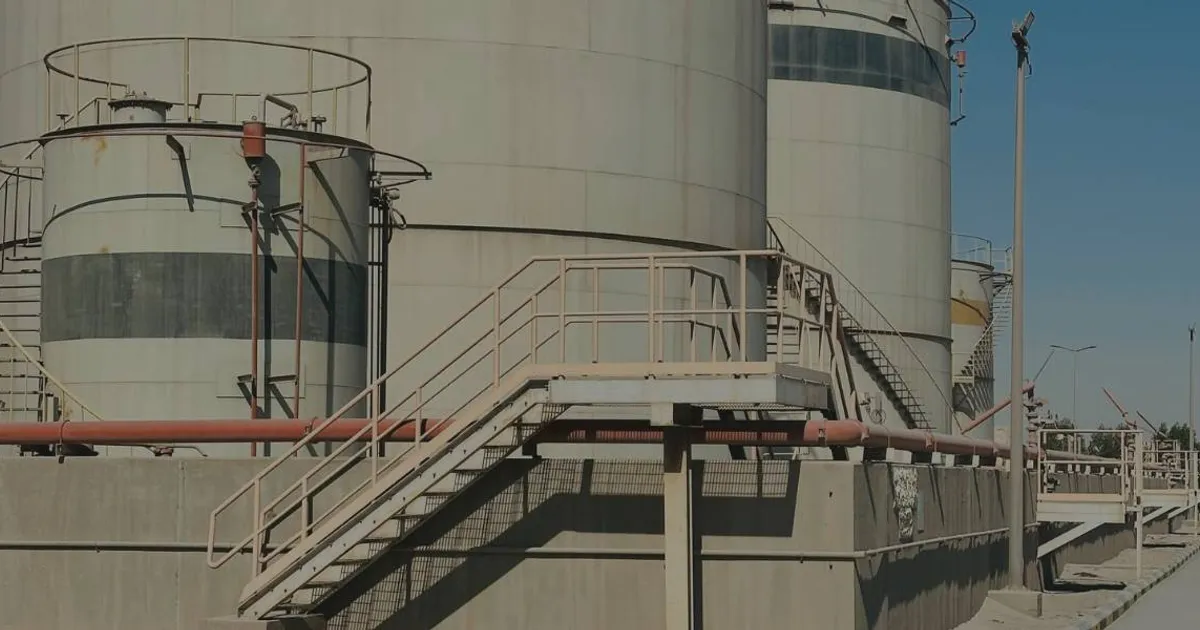
Cryogenic sealing presents a unique challenge: no standard elastomer remains flexible below approximately -60°C. At LNG temperatures (-162°C) or liquid nitrogen temperatures (-196°C), rubber O-rings harden, crack and leak almost instantly. The glass transition temperature (Tg) of NBR is approximately -35°C, of silicone is -60°C, and of FKM is -20°C. Below these temperatures, the polymers transition from rubbery to glassy states, losing all elastic recovery and becoming brittle. For these applications, PTFE is the only practical sealing material. However, because PTFE lacks elastic recovery, cryogenic seals almost always use spring-energised PTFE designs. A stainless steel or Inconel spring applies continuous radial force, maintaining seal contact as the PTFE jacket contracts in the cold. The spring must be designed to provide adequate force at the minimum temperature while not overloading the PTFE at ambient temperature during assembly and maintenance. We supply solid PTFE O-rings for static face seals and spring-energised PTFE seals for valves, flanges, LNG loading arms, and cryogenic pumps. All designs are validated for thermal cycling and low-temperature leakage. Our cryogenic seals are used in LNG import terminals, satellite regasification plants, aerospace propulsion systems, and medical cryogenics. The thermal contraction of materials at cryogenic temperatures is dramatic. PTFE contracts approximately 2% from +20°C to -196°C. Stainless steel 316L contracts approximately 0.3% over the same range. This differential contraction means that a PTFE seal installed with interference fit at room temperature will have reduced contact pressure at cryogenic temperature unless the spring provides compensating force. Spring-energized designs solve this problem by using a metal spring (typically 300 series stainless steel, 17-7PH, or Inconel X-750) that maintains its elasticity at cryogenic temperatures. The spring is designed with sufficient initial deflection that it still applies adequate force after the PTFE jacket contracts. LNG service imposes additional requirements beyond low temperature. LNG is predominantly methane with smaller amounts of ethane, propane, and heavier hydrocarbons. Seals must be compatible with these hydrocarbons and must not contaminate the LNG. PTFE is chemically inert to all LNG components. However, in oxygen-enriched environments (such as liquid oxygen at -183°C or air separation plants), standard PTFE can generate static electricity during flow, creating an ignition hazard. Anti-static or carbon-filled PTFE grades are required for oxygen service to provide electrical conductivity and prevent static discharge. Thermal cycling is a major concern in cryogenic applications. LNG loading arms, for example, may cycle between ambient temperature (+20°C) and LNG temperature (-162°C) multiple times per day during ship loading operations. Each cycle induces thermal stress in both the seal and the metal housing. PTFE's high coefficient of thermal expansion (approximately 10× that of steel) causes significant dimensional change. Spring-energized designs accommodate this by allowing the PTFE jacket to slide relative to the spring during thermal cycling. Solid PTFE O-rings in static flanges must be designed with sufficient compression at ambient temperature to maintain sealing after contraction. Common failure modes in cryogenic seals include: loss of spring force due to spring fatigue or incorrect design; PTFE cold flow (creep) causing extrusion from the groove; thermal shock cracking from rapid cooling; and leakage due to insufficient compression after thermal contraction. Each failure mode is preventable through proper material selection, groove design, and installation procedures. Our cryogenic sealing program includes comprehensive low-temperature testing. We validate seals for leakage at -196°C using helium mass spectrometry, thermal cycling between +20°C and -196°C, and spring force measurement across the temperature range. Custom designs are supported by finite element analysis (FEA) of thermal stress and spring behavior. All cryogenic seals are cleaned and packaged to prevent moisture condensation and freezing, which can block seal movement.
Application Requirements
Recommended Materials
Virgin PTFE
Static flange seals, valve seats, cryogenic fittings, and any application where maximum chemical purity and low friction are required. Virgin PTFE has the lowest friction coefficient and highest chemical resistance.
FDA / high purity
Glass-filled PTFE
Improved creep resistance in loaded static glands where cold flow would cause loss of compression. Glass fiber reduces PTFE's tendency to flow under load while maintaining chemical inertness.
15-25% glass fibre
Carbon-filled PTFE
Oxygen service, explosive atmospheres, and any application where static electricity must be dissipated. Carbon provides electrical conductivity to prevent static discharge in flowing oxygen or hydrocarbon vapors.
Anti-static / conductive
Spring-energised PTFE
Dynamic valves, LNG loading arms, cryogenic pumps, and any application requiring reliable sealing through thermal cycling. The metal spring compensates for PTFE thermal contraction and provides continuous sealing force.
Stainless steel or Inconel spring
Bronze-filled PTFE
High-pressure cryogenic valves and compressor seals where improved wear resistance and thermal conductivity are required. Bronze improves compressive strength and heat dissipation compared to virgin PTFE.
40-60% bronze powder
Design Tips
- 1.Never specify elastomer O-rings for service below -60°C. All standard elastomers become glassy and brittle at cryogenic temperatures, losing all sealing capability.
- 2.Use spring-energised PTFE for any application requiring reliable sealing at cryogenic temperatures. Solid PTFE relies on initial compression and will leak after thermal contraction.
- 3.Design grooves to accommodate thermal contraction of both PTFE and metal housing. PTFE contracts ~2% from +20°C to -196°C; steel contracts ~0.3%.
- 4.Surface finish should be Ra ≤ 0.4 μm for static PTFE seals. Smoother surfaces improve sealability; rougher surfaces cause leakage and accelerated wear.
- 5.Specify anti-static PTFE grades for oxygen-rich or explosive gas environments. Static discharge in flowing oxygen can cause ignition.
- 6.Use Inconel X-750 springs for temperatures below -100°C where standard stainless steel may lose too much elasticity. Inconel maintains spring force to -250°C.
- 7.Design for 25–30% compression at ambient temperature for solid PTFE static seals to ensure adequate residual compression after thermal contraction.
- 8.Pre-cool seals slowly before pressurization to avoid thermal shock cracking. Rapid cooling from +20°C to -162°C can cause PTFE to crack from thermal stress.
Common Sizes
| Size | Typical Use |
|---|---|
| Standard AS568 cross-sections for static cryogenic O-rings | General application |
| Custom PTFE rings for large-diameter LNG flanges | Up to 2,000 mm diameter |
| Spring-energised seals for valve stems and ball-valve seats | General application |
| LNG transfer swivel and loading arm seals to customer drawing | General application |
Frequently Asked Questions
Can rubber O-rings be used for LNG?
No. All standard elastomers become glassy and lose sealing force below approximately -60°C. LNG service at -162°C requires PTFE or metal seals. The glass transition temperature (Tg) is the temperature below which a polymer transitions from rubbery to glassy. For common elastomers: NBR Tg ≈ -35°C, HNBR Tg ≈ -40°C, silicone Tg ≈ -60°C, FKM Tg ≈ -20°C, and FFKM Tg ≈ -15°C. Below Tg, the polymer chains are frozen in position and cannot deform to seal against surface imperfections. Even 'low-temperature' grades of FKM (GFLT) with Tg of -30°C are unsuitable for LNG. Special cryogenic elastomers exist (some fluorosilicones to -80°C), but none approach the -162°C of LNG. For all cryogenic applications, PTFE is the standard sealing material, with spring-energized designs providing the necessary elastic recovery.
What is a spring-energised PTFE seal?
It is a PTFE seal jacket backed by a metal spring (stainless steel or Inconel). The spring provides the elastic force that PTFE lacks, maintaining seal contact through extreme temperature cycles. The design consists of a PTFE jacket (which may be U-shaped, V-shaped, or C-shaped) with a metal spring fitted inside. The spring is pre-compressed during installation, applying continuous radial force against the PTFE jacket. As the PTFE contracts during cooling, the spring expands to maintain contact pressure. Common spring types include: helical springs (coiled wire, providing uniform force); cantilever springs (V-shaped, providing high initial force); and canted coil springs (flattened helical, providing consistent force over a wide deflection range). Spring materials include 300 series stainless steel (for -100°C to +200°C), 17-7PH precipitation-hardened stainless steel (for -150°C to +300°C), and Inconel X-750 (for -250°C to +450°C). The spring is selected based on the temperature range, chemical environment, and required force.
Is PTFE safe for liquid oxygen service?
Yes. Virgin PTFE is compatible with liquid oxygen (-183°C). For oxygen-enriched environments, anti-static or carbon-filled PTFE is recommended to prevent static discharge. PTFE has a very high limiting oxygen index (LOI >95%), meaning it will not support combustion in oxygen. However, in flowing oxygen systems, static electricity can build up on non-conductive PTFE surfaces, creating sparks that could ignite contaminants or other materials. Carbon-filled PTFE (15–25% carbon) provides electrical conductivity to dissipate static charges. For gaseous oxygen at high pressure and velocity, additional considerations apply—NASA and industry standards restrict PTFE use in oxygen above certain pressure-velocity (PV) limits. For liquid oxygen, PTFE is widely used in valves, pumps, and transfer lines with excellent safety record. All oxygen service seals must be meticulously cleaned to remove organic contaminants, particulates, and oils that could ignite.
What is the largest cryogenic seal you can manufacture?
We regularly produce large-diameter PTFE rings and spring-energised seals up to 2,000 mm for LNG flanges and cryogenic vessels. Larger sizes are available on request. Large cryogenic seals present unique manufacturing challenges: PTFE must be compression-molded or skived from large billets; spring design becomes critical for maintaining uniform force around the circumference; and thermal contraction must be carefully calculated to ensure the seal maintains contact across the full diameter. For seals above 1,000 mm, we typically use segmented PTFE designs with scarf-cut or step-cut joints to accommodate thermal expansion and facilitate installation. The spring is also segmented with overlapping joints. For very large flanges ( LNG storage tank manways, for example), metal C-rings or metal O-rings with PTFE coating may be more practical than all-PTFE designs. We provide finite element analysis (FEA) for large seal designs to verify thermal stress and spring behavior.
How do you prevent thermal shock damage to cryogenic seals?
Thermal shock occurs when a seal is cooled too rapidly, creating thermal gradients that induce internal stress exceeding the material's strength. PTFE is particularly susceptible because it has low thermal conductivity (0.25 W/m·K) and high thermal expansion. To prevent thermal shock: (1) Pre-cool seals slowly using cold nitrogen gas before introducing liquid cryogen. (2) Design seals with gradual thickness transitions to avoid stress concentrators. (3) Use spring-energized designs that allow the PTFE to move relative to the spring during contraction. (4) Avoid thick solid PTFE sections—thinner sections (2–5 mm) tolerate thermal shock better than thick sections (>10 mm). (5) Ensure the seal and housing are at similar temperatures before pressurization. (6) Use PTFE grades with improved thermal shock resistance (some modified PTFE compounds have better toughness). In LNG loading arms, typical cool-down rates are controlled to <10°C/minute to prevent thermal shock. Rapid cool-down (>50°C/minute) can cause cracking even in well-designed seals.
What groove design is best for cryogenic PTFE seals?
Cryogenic groove design must account for thermal contraction, PTFE cold flow, and spring behavior. Key principles: (1) Groove depth should provide 25–30% compression at ambient temperature for solid PTFE seals, ensuring adequate residual compression after thermal contraction. (2) Groove width should be 1.3–1.5 × PTFE width to allow for lateral expansion and spring accommodation. (3) Groove corners should have radii ≥0.5 mm to prevent stress concentration. (4) Surface finish should be Ra ≤0.4 μm for static seals and Ra ≤0.2 μm for dynamic seals. (5) For spring-energized seals, the groove must accommodate both the PTFE jacket and the spring, with appropriate clearances for spring movement. (6) Metal-to-metal contact should be designed as the primary pressure boundary for high-pressure applications, with the PTFE seal as secondary. (7) Groove materials should be austenitic stainless steel (316L) to maintain toughness at cryogenic temperatures. Avoid ferritic steels that become brittle below -50°C.
How does PTFE cold flow affect seal performance?
PTFE cold flow (creep) is the gradual plastic deformation of PTFE under sustained load. At room temperature, PTFE creeps significantly under compression, causing loss of sealing force over time. At cryogenic temperatures, creep is greatly reduced but not eliminated. In static seals, cold flow can cause the PTFE to extrude from the groove, reducing compression and causing leakage. To mitigate cold flow: (1) Use glass-filled or bronze-filled PTFE, which has 50–80% better creep resistance than virgin PTFE. (2) Design grooves with metal backup to limit extrusion. (3) Use spring-energized designs where the spring compensates for PTFE creep by maintaining force. (4) For solid PTFE seals, use higher initial compression (25–30%) to accommodate creep loss. (5) Consider PCTFE (polychlorotrifluoroethylene, Kel-F) which has much lower creep than PTFE but poorer chemical resistance. In practice, spring-energized designs are the most reliable solution for dynamic cryogenic applications, while solid PTFE with metal backup works for static applications.
What spring material is best for cryogenic temperatures?
Spring material selection depends on the minimum operating temperature and chemical environment. For temperatures down to -100°C, 300 series austenitic stainless steel (304, 316) is adequate and cost-effective. For temperatures down to -150°C, 17-7PH precipitation-hardened stainless steel is preferred due to its higher strength and better fatigue resistance. For temperatures below -150°C (LNG, liquid nitrogen, liquid helium), Inconel X-750 is the standard choice. Inconel X-750 maintains excellent spring properties to -250°C and resists corrosion in cryogenic hydrocarbon environments. For liquid oxygen service, Monel K-500 or nickel alloys are preferred to avoid sparking. Spring design must account for the reduction in modulus at low temperature—most spring materials become slightly stiffer (higher modulus) at cryogenic temperatures, which increases spring force. The spring must be designed to provide adequate force at the minimum temperature without overloading the PTFE at ambient temperature. We provide spring force vs. temperature curves for all cryogenic spring materials.
Can you provide cryogenic seal testing and certification?
Yes, we provide comprehensive cryogenic seal testing including: helium leak testing at -196°C using mass spectrometry (sensitivity 10⁻⁹ mbar·L/s); thermal cycling between +20°C and -196°C for 100+ cycles; spring force measurement across the temperature range; PTFE compression set measurement after cryogenic exposure; and burst pressure testing at cryogenic temperature. All testing is performed in cryogenic test chambers with liquid nitrogen cooling. We provide test reports with leakage rates, force curves, and photographic documentation of seal condition. For LNG applications, we can perform methane compatibility testing and validate seals against specific flange standards (ASME B16.5, API 6A, EN 1092). For aerospace applications, we provide testing per MIL-PRF-83461 and RTCA DO-160. Custom test protocols can be developed to match customer-specific requirements.
What is the difference between PTFE and PCTFE for cryogenic seals?
PTFE (polytetrafluoroethylene) and PCTFE (polychlorotrifluoroethylene, trade name Kel-F) are both fluoropolymers used for cryogenic seals, but they have different properties. PTFE has better chemical resistance, lower friction, and is less expensive. PCTFE has significantly lower gas permeability, better creep resistance, and higher hardness. For cryogenic sealing, the key differences are: (1) Creep resistance: PCTFE has 5–10× better creep resistance than PTFE, making it better for static seals under sustained load. (2) Gas permeability: PCTFE has 10× lower permeability than PTFE, making it preferred for high-vacuum and gas-tight applications. (3) Temperature range: PTFE operates to -200°C; PCTFE becomes brittle below -100°C and is not suitable for LNG. (4) Chemical resistance: PTFE resists virtually all chemicals; PCTFE is attacked by some chlorinated solvents and molten alkali metals. For LNG and liquid nitrogen, PTFE is the standard. For gaseous cryogenics and high-vacuum applications where permeation is critical, PCTFE may be preferred if temperatures remain above -100°C.
Request a custom quote
Request a cryogenic sealing quote with PTFE specification