
Hydraulic Cylinder O-Ring Design Guide
Rod and piston seal material selection, groove dimensions, compression rates, and anti-extrusion solutions for mobile and industrial hydraulics.
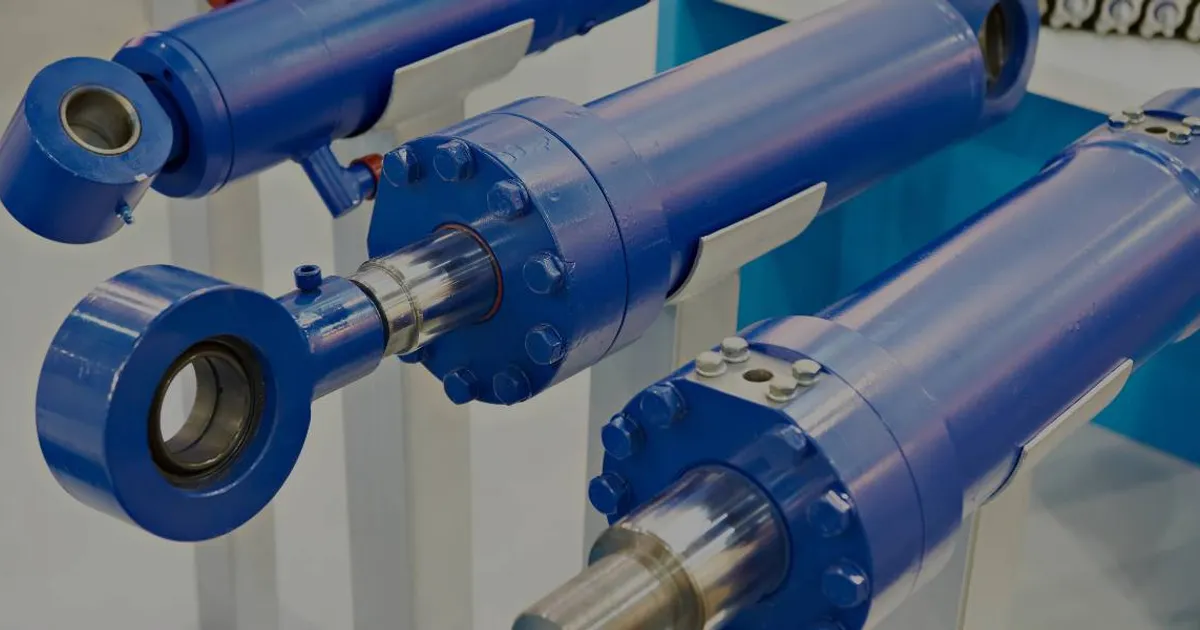
Hydraulic cylinders are one of the most demanding dynamic sealing environments. O-rings must resist petroleum-based hydraulic oils, tolerate pressure spikes, and maintain elasticity across a wide temperature range. The dynamic motion of rods and pistons creates continuous friction, heat generation, and wear that can rapidly degrade an improperly specified seal. This guide covers rod seal and piston seal design for mobile equipment, industrial presses, and agricultural machinery. We explain material selection (NBR vs HNBR vs FKM), recommended groove dimensions for reciprocating motion, compression rates that balance leakage control against friction, and when to add PTFE backup rings to prevent extrusion at pressures above 150 bar. Proper groove design is as critical as material selection—an O-ring in a poorly designed groove will fail prematurely regardless of material quality. The operating environment of hydraulic cylinders varies enormously. Mobile construction equipment faces contaminated oil, temperature extremes from -40°C arctic conditions to +120°C tropical heat, and shock loading from rough terrain. Industrial presses operate in cleaner environments but may experience continuous high pressure (200–350 bar) and rapid cycling (hundreds of strokes per hour). Marine hydraulics encounter saltwater spray and corrosion. Each environment imposes different demands on seal material, hardness, and groove geometry. Hydraulic fluids themselves vary in chemistry and aggressiveness. Mineral oil-based fluids (ISO VG 32–68) are the standard and are well-tolerated by NBR. Biodegradable hydraulic fluids (HETG, HEES, HEPG) are increasingly required for environmental compliance and place greater demands on seal materials—synthetic ester-based fluids (HEES) can attack standard NBR, making HNBR or FKM necessary. Water-glycol fluids (HFC) require EPDM rather than NBR, as NBR swells excessively in glycol. Phosphate ester fluids (HFDR, Skydrol) aggressively attack NBR and require FKM or specialized compounds. Specifying the wrong material for the fluid type guarantees premature failure. Pressure is the primary driver of extrusion failure. At pressures below 100 bar, a properly designed O-ring groove with tight clearances may not require backup rings. Above 150 bar, extrusion into the radial clearance gap becomes a significant risk, particularly for softer compounds. At 300+ bar, PTFE backup rings are essential regardless of material hardness. The extrusion gap (radial clearance between piston and bore, or rod and gland) must be minimized and controlled—typical recommendations are 0.05–0.15 mm for pressures up to 200 bar, and 0.02–0.05 mm for higher pressures. Worn cylinders with excessive clearance will destroy even the best seals. Common failure modes in hydraulic O-rings include: spiral failure (the O-ring twists and rolls in the groove during stroke, causing leakage and damage); extrusion into clearance gaps under pressure; abrasion from contaminated oil (particulate contamination is the leading cause of seal failure in mobile hydraulics); compression set from prolonged high-temperature exposure; and chemical degradation from incompatible hydraulic fluid. Each failure mode leaves characteristic damage patterns that an experienced engineer can use to diagnose the root cause. Our hydraulic sealing program includes not just O-ring supply but comprehensive engineering support. We provide groove design calculations, material compatibility testing with your specific hydraulic fluid, failure analysis of returned seals, and custom compound development for extreme applications. All hydraulic O-rings are produced with tight dimensional tolerances (AS568 Class 2 or better) and are 100% visually inspected for surface defects that could initiate failure in dynamic service.
Application Requirements
Recommended Materials
NBR 70-90 Shore A
General-purpose hydraulic oil sealing in mobile equipment, industrial machinery, and agricultural implements. NBR 70 Shore A is the standard for low-pressure rod seals and static applications. NBR 90 Shore A provides improved extrusion resistance for high-pressure piston seals without backup rings.
Temp: -40°C to +120°C
Standard choice for most hydraulic cylinders. Use 90 Shore A for high pressure or large clearance gaps. Not suitable for bio-oils, phosphate esters, or temperatures above +120°C.
HNBR 80-90 Shore A
High-temp hydraulics, bio-oils (HEES, HETG), sour gas exposure, and mobile equipment operating in ozone-rich environments. HNBR's saturated backbone provides superior abrasion resistance and longer service life in contaminated oil.
Temp: -40°C to +150°C
Superior abrasion and ozone resistance versus NBR. Recommended for all environmentally acceptable hydraulic fluids (EAHF). Better compression set resistance at elevated temperature.
FKM 75-90 Shore A
High-temp synthetic fluids, phosphate ester fluids (Skydrol, HFDR), and applications where continuous operating temperature exceeds +120°C. Common in aircraft hydraulics and high-performance industrial systems.
Temp: -20°C to +200°C
Use when continuous operating temperature exceeds +120°C or when phosphate ester fluids are used. GFLT grades available for low-temperature flexibility to -30°C.
Polyurethane (PU) 90-95 Shore A
High-pressure hydraulic cylinders in clean environments where maximum wear resistance and extrusion strength are required. Ideal for injection molding machines, presses, and servo-hydraulic systems.
Temp: -30°C to +100°C
Highest abrasion resistance and tensile strength of any hydraulic seal material. Not suitable for water-glycol or temperatures above +100°C. Requires smooth dynamic surfaces (Ra < 0.4 μm).
PTFE + Elastomer Energized Seals
Ultra-high pressure applications above 350 bar, or where stick-slip must be minimized in precision servo-hydraulic systems. PTFE jacket provides low friction; elastomer energizer provides sealing force.
Temp: -200°C to +260°C
Extremely low friction coefficient (<0.05) for smooth servo response. Requires precise groove design and very smooth surface finishes. Higher cost than standard O-rings.
Design Tips
- 1.Dynamic groove width should be 1.15–1.25 × CS to allow the O-ring to roll rather than twist during stroke. A groove that is too narrow causes the O-ring to spiral and fail; too wide allows excessive movement and instability.
- 2.Keep surface finish at 0.2–0.4 μm Ra for dynamic sealing surfaces to minimize abrasion. Rougher surfaces accelerate wear; smoother surfaces (<0.1 μm Ra) may fail to retain lubricant film, causing stick-slip.
- 3.Install a lead-in chamfer of 15–20° on rod and bore entries to prevent damaging the seal during assembly. The chamfer should be polished smooth—sharp edges will nick the O-ring and create leakage paths.
- 4.Use PTFE backup rings when pressure exceeds 150 bar or when radial clearance gaps are greater than 0.1 mm. Install the backup ring on the low-pressure side of the O-ring to prevent extrusion into the clearance gap.
- 5.Target 10–15% compression for dynamic rod and piston seals. Too much compression increases friction, heat, and wear; too little causes leakage, particularly during pressure spikes.
- 6.Design static flange seals with 15–20% compression. Static seals can tolerate more compression than dynamic seals because friction and heat are not concerns.
- 7.Specify 90 Shore A for high-pressure applications without backup rings, but recognize that harder compounds have lower conformability and require better surface finish and tighter tolerances.
- 8.Filter hydraulic oil to ISO 4406 18/16/13 or better to minimize abrasive wear. Particle contamination is the leading cause of seal failure in mobile hydraulics, and no seal material can survive indefinitely in dirty oil.
Common Sizes
| Size | Typical Use |
|---|---|
| AS568-210 to -222 | Small bore hydraulic cylinders (up to 38 mm bore) |
| AS568-325 to -341 | Medium bore cylinders (40–100 mm) |
| AS568-425 to -445 | Large bore cylinders and rod seals (100–250 mm) |
Frequently Asked Questions
What is the best O-ring material for hydraulic cylinders?
NBR 70–90 Shore A is the standard for mineral oil-based hydraulics. HNBR is preferred for bio-oils, higher temperatures, or when ozone resistance is required. The choice depends on the hydraulic fluid type, operating temperature, and pressure. For standard mineral oil (ISO VG 32–68) at temperatures below +100°C, NBR is the most cost-effective choice and performs reliably for years. HNBR becomes necessary when: operating temperatures regularly exceed +100°C; the fluid is a biodegradable synthetic ester (HEES) that attacks NBR; the equipment operates outdoors where ozone and UV exposure degrade NBR; or the application requires longer service intervals. FKM is specified for phosphate ester fluids (Skydrol, HFDR) and continuous temperatures above +120°C. Polyurethane offers the best wear resistance for clean, high-pressure systems but is incompatible with water-glycol and degrades above +100°C.
At what pressure do I need backup rings?
PTFE backup rings are recommended at pressures above 150 bar or whenever the radial clearance gap exceeds 0.10 mm to prevent O-ring extrusion. The exact threshold depends on O-ring hardness, material, and clearance gap size. At 100 bar, a 90 Shore A NBR O-ring in a 0.05 mm gap may not extrude significantly. At 200 bar, the same seal will extrude into a 0.15 mm gap within hours. Backup rings work by providing a hard, low-friction barrier between the O-ring and the clearance gap. They are installed on the low-pressure side of the O-ring (the side away from the pressure source). For bi-directional pressure, two backup rings are used—one on each side. Bronze-filled PTFE offers the highest extrusion resistance for the most demanding applications. Solid PTFE backup rings are standard; spiral or scarf-cut designs allow installation without disassembling the cylinder.
What compression rate should I use for a dynamic hydraulic seal?
Target 10–15% compression for rod and piston seals in dynamic hydraulic applications. Too much compression (above 20%) increases friction, heat generation, and wear, leading to premature failure through thermal degradation and abrasion. Too little compression (below 8%) may seal at low pressure but will leak during pressure spikes or when thermal contraction reduces seal force. Static hydraulic seals can use 15–20% compression since friction is not a concern. The compression percentage is calculated as: (CS - Groove Depth) / CS × 100%, where CS is the O-ring cross-sectional diameter. For a 3.53 mm CS O-ring in a 3.0 mm deep groove, compression = (3.53 - 3.0) / 3.53 × 100% = 15%. Always verify compression across the full tolerance range of both the O-ring and groove dimensions.
Can I use the same O-ring for rod and piston sealing?
Yes, provided the groove design respects the different motion directions. Rod seals experience outward pressure (pressure pushes the seal against the rod); piston seals experience inward pressure (pressure pushes the seal against the bore). Backup rings should be placed on the low-pressure side in both cases. However, rod seals and piston seals often have different size requirements and may experience different operating conditions. Rod seals are exposed to the external environment and must resist contamination ingress. Piston seals operate in the cleaner internal environment of the cylinder bore. Rod seals may also experience side loading from misalignment, requiring harder compounds or wear rings. In practice, while the same O-ring compound can be used for both, the groove dimensions and backup ring configuration should be optimized separately for rod and piston applications.
How does hydraulic fluid contamination affect seal life?
Particle contamination is the single largest cause of premature seal failure in hydraulic systems. Abrasive particles (silica, metal wear debris, dirt) score the dynamic sealing surface and abrade the O-ring, creating leakage paths and accelerating wear. Water contamination above 500 ppm causes hydrolysis in some compounds and promotes corrosion of metal surfaces that damages seals. Air contamination causes diesel effect (micro-detonation of air bubbles under pressure) that erodes seal surfaces. Chemical contamination from incompatible fluids or degraded oil additives can attack the polymer backbone. To maximize seal life: filter oil to ISO 4406 18/16/13 or better; monitor water content and keep below 200 ppm; avoid mixing hydraulic fluid types; and change oil at recommended intervals. In mobile equipment, effective wiper seals on the rod are essential to exclude external contamination.
What causes spiral failure in hydraulic O-rings?
Spiral failure occurs when the O-ring twists and rolls in the groove during reciprocating motion, creating a spiral cut pattern on the seal surface. The primary causes are: insufficient groove width (the O-ring cannot roll freely and instead twists); excessive clearance or side loading (the O-ring is pinched or loaded unevenly); lack of lubrication (dry running causes the O-ring to grip and twist rather than roll); and excessive stroke speed (rapid motion prevents the O-ring from returning to its neutral position). To prevent spiral failure: design groove width at 1.15–1.25 × CS; ensure concentric alignment of rod and bore; maintain adequate lubrication; and consider using X-rings (quad rings) which have four contact surfaces and resist spiral failure better than round O-rings. For critical applications, PTFE anti-extrusion rings can also help stabilize the O-ring in the groove.
How do I select seals for biodegradable hydraulic fluids?
Environmentally acceptable hydraulic fluids (EAHF) fall into three categories: HETG (triglyceride, vegetable oil-based), HEES (synthetic ester), and HEPG (polyglycol). Each requires different seal materials. HETG fluids are generally compatible with standard NBR but may cause slightly more swell than mineral oil. HEES fluids can aggressively attack NBR due to the polar ester groups; HNBR or FKM is required for long-term compatibility. HEPG fluids require EPDM seals, as NBR swells excessively in polyglycol. Always verify compatibility through immersion testing at the maximum operating temperature, as fluid formulations vary between manufacturers. Test for volume swell, hardness change, tensile strength retention, and compression set after 1,000 hours at +80–100°C. We provide compatibility data for major biodegradable fluid brands including PANOLIN, FUCHS PLANTOHYD, and Shell Naturelle.
What surface finish is required for hydraulic cylinder bores and rods?
For dynamic sealing surfaces in hydraulic cylinders, a surface finish of 0.2–0.4 μm Ra (8–16 μin) is recommended. This range provides enough surface texture to retain a lubricating oil film while being smooth enough to minimize abrasive wear. Rougher surfaces (>0.8 μm Ra) accelerate seal wear and cause leakage. Surfaces that are too smooth (<0.1 μm Ra) may fail to retain lubricant, causing stick-slip motion and accelerated wear through adhesive friction. The surface lay (machining pattern) should be concentric for rotating applications and longitudinal for reciprocating applications. Cross-hatched or irregular patterns can cause seal damage. Hard chrome plating on rods should be 25–50 μm thick with a hardness of 65–72 HRC for optimal wear resistance. Plasma-transferred arc (PTA) welding and grinding can provide even better surface properties for severe-duty applications.
How often should hydraulic cylinder seals be replaced?
Preventive replacement intervals depend on operating conditions. In clean, temperate industrial environments with proper filtration, hydraulic seals can last 5,000–10,000 operating hours (2–5 years). In contaminated mobile equipment with dust, moisture, and shock loading, 2,000–4,000 hours (1–2 years) is more typical. High-cycle automation with rapid stroke speeds may require annual replacement regardless of hours. Warning signs that replacement is needed include: external leakage (oil weeping past the rod seal); increased friction or stick-slip motion; internal leakage causing the cylinder to drift under load; and visible contamination in the hydraulic fluid. Waiting for catastrophic failure is false economy—a leaking seal allows contamination ingress that damages the entire hydraulic system. We recommend establishing replacement intervals based on historical data and condition monitoring rather than running to failure.
Can you provide custom hydraulic seal kits?
Yes, we manufacture custom hydraulic seal kits containing all O-rings, backup rings, and wear rings required for complete cylinder rebuilds. Kits are customized to your cylinder specifications and include: rod seals, piston seals, static O-rings for end caps and ports, PTFE backup rings, guide rings/wear rings, and assembly lubricant. Each kit is labeled with the cylinder model, serial number range, and bill of materials. We can produce kits for any cylinder manufacturer (Parker, Rexroth, HYDAC, custom designs) and for any quantity from single prototypes to production volumes. All kit components are produced from the same batch of material to ensure consistent properties, and each kit includes a certificate of conformance. For OEM customers, we offer kanban and vendor-managed inventory programs to ensure seal kits are always available when needed.
Need hydraulic cylinder seals?
We supply NBR, HNBR and FKM O-rings in standard and custom sizes for hydraulic applications. MOQ 1 piece.