
Fuel-Resistant O-Ring Guide
Gasoline, diesel, jet fuel and biodiesel sealing. Material selection for automotive, aerospace and marine fuel systems.
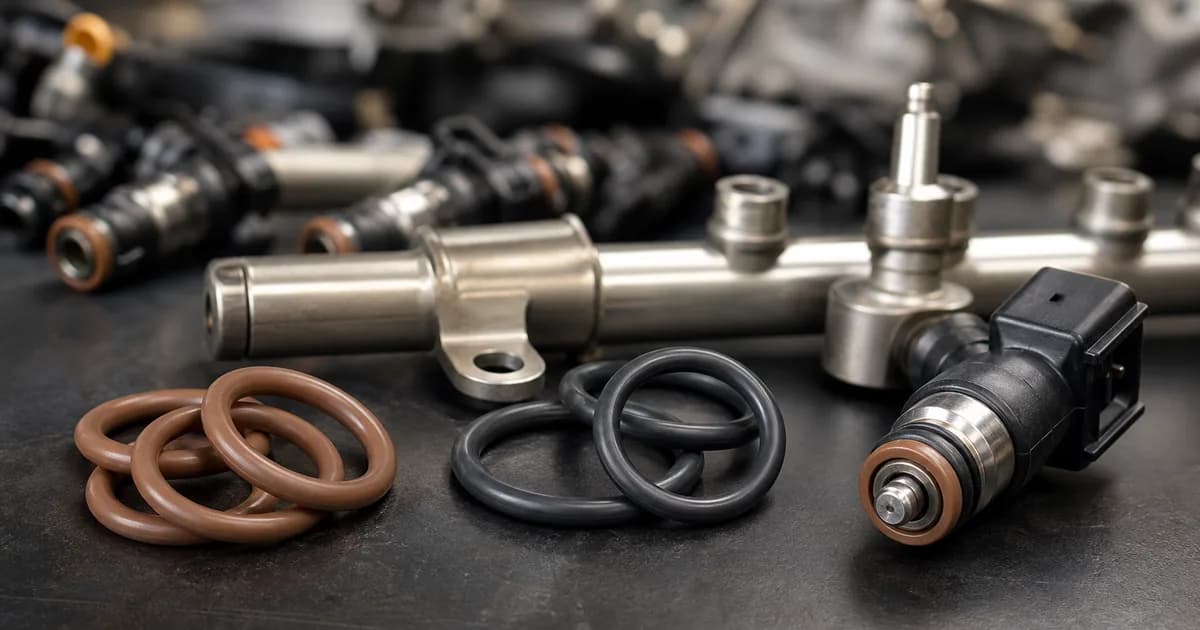
Fuel system O-rings must resist hydrocarbon swell, maintain elasticity across temperature swings, and tolerate aromatic content that increases with modern fuel formulations. This guide matches fuel types to the correct O-ring material for reliable, leak-free sealing. **Fuel type compatibility summary:** | Fuel Type | Best Materials | Temperature Limit | Notes | |---|---|---|---| | Gasoline (non-aromatic) | [NBR 70A](/products/nbr/), [FKM 75A](/products/fkm/) | NBR +120°C; FKM +200°C | NBR is standard for automotive | | Gasoline (high aromatic / E10-E85) | [FKM 75A](/products/fkm/), [HNBR 80A](/products/hnbr/) | FKM +200°C | High aromatics attack standard NBR | | Diesel (low sulfur) | [NBR 70A](/products/nbr/), [FKM 75A](/products/fkm/) | NBR +120°C; FKM +200°C | NBR standard for most diesel | | Biodiesel (B20-B100) | [FKM 75A](/products/fkm/), [HNBR 80A](/products/hnbr/) | HNBR +150°C | Bio-content attacks standard NBR | | Jet A / Jet A-1 | [FKM 75A](/products/fkm/), [FVMQ 70A](/products/fvmq/) | FVMQ +175°C | FVMQ for -40°C cold start | | JP-4 / JP-8 (military) | [FVMQ 70A](/products/fvmq/), [FKM 75A](/products/fkm/) | FVMQ +175°C | MIL-PRF-25988 FVMQ grade | | AVGAS 100LL | [FKM 75A](/products/fkm/) | FKM +200°C | Leaded aviation gasoline | | Racing fuel (high aromatic) | [FKM 90A](/products/fkm/), [FFKM 75A](/products/ffkm/) | FFKM +325°C | Maximum aromatic resistance | **Material recommendations by fuel system:** **Automotive fuel injection systems** operate at 3–10 bar with under-hood temperatures to +120°C. [NBR 70 Shore A](/products/nbr/) is the standard for gasoline and diesel in most production vehicles. For direct-injection systems with higher temperatures and aromatic content, [HNBR 80 Shore A](/products/hnbr/) provides improved temperature and biofuel resistance. [FKM 75 Shore A](/products/fkm/) is specified for high-performance and turbocharged engines where sustained temperatures exceed +120°C. **Aerospace fuel systems** must seal from -40°C arctic ground conditions to +100°C hot fuel. [FVMQ (fluorosilicone)](/products/fvmq/) is the aerospace standard — it combines fuel resistance with low-temperature flexibility to -60°C. [FKM](/products/fkm/) is used in engine-mounted components where temperature exceeds +150°C but cold-start flexibility is less critical. Both materials are available to MIL-PRF-25988 and SAE AMS-R-83485. **Marine outboard and inboard fuel systems** face salt spray, UV, and fuel contact. [FKM 75 Shore A](/products/fkm/) is preferred for its combination of fuel resistance, weathering resistance, and temperature capability. [NBR](/products/nbr/) is acceptable for low-cost recreational marine applications at moderate temperatures. **Biodiesel (B20-B100)** contains fatty acid methyl esters (FAME) that attack standard NBR through ester hydrolysis and oxidative degradation. [HNBR](/products/hnbr/) and [FKM](/products/fkm/) are both compatible with biodiesel blends. For B100 and tropical storage conditions, FKM is the safer long-term choice. For a detailed fuel compatibility search, use our [Chemical Compatibility Tool](/tools/chemical-compatibility/).
Application Requirements
Recommended Materials
NBR 70 Shore A
Standard automotive gasoline and diesel fuel systems. Low-cost, proven, and widely available. Suitable for non-aromatic and low-aromatic fuels below +100°C.
Temp: -40°C to +120°C
Standard for most OEM automotive fuel systems. Not suitable for biodiesel, high-aromatic fuels, or sustained temperatures above +100°C.
HNBR 80 Shore A
Direct-injection gasoline, biodiesel blends (B20-B100), and automotive fuel systems requiring improved temperature and ozone resistance.
Temp: -40°C to +150°C
Superior to NBR for biofuels and high-temp engine bays. Saturated backbone resists oxidative degradation from fuel additives.
FKM 75 Shore A
High-performance automotive, aerospace, marine, and racing fuel systems. Maximum fuel resistance and temperature capability.
Temp: -20°C to +200°C
Handles aromatics, biodiesel, and synthetic fuels. GFLT grade extends low temperature to -40°C. Not for ketone-containing fuels.
FVMQ 70 Shore A
Aerospace fuel systems, military vehicles, and applications requiring fuel resistance combined with arctic low-temperature flexibility.
Temp: -60°C to +175°C
Only fuel-resistant elastomer to -60°C. MIL-PRF-25988 and AMS-R-83485 grades available. Standard color: blue.
FFKM 75 Shore A
Ultra-aggressive racing fuels, exotic synthetic fuels, and critical aerospace seals where failure is not an option.
Temp: -15°C to +325°C
Maximum fuel and chemical resistance with elastic recovery. 50×+ NBR cost — justified for critical applications only.
Design Tips
- 1.Always specify fuel type and aromatic content when ordering fuel system O-rings — 'gasoline' is not specific enough for material selection.
- 2.Biodiesel and ethanol blends (E10-E85) require HNBR or FKM — standard NBR degrades in biofuel environments.
- 3.Replace fuel system O-rings after every disassembly — fuel exposure hardens elastomers and reused seals leak.
- 4.For aerospace applications, specify MIL-PRF-25988 (FVMQ) or AMS-R-83485 grades with full material certification.
- 5.Fuel injector seals see the highest temperatures in the fuel system — specify FKM or HNBR for direct-injection engines.
- 6.Store fuel system O-rings in original packaging away from ozone and UV — NBR and HNBR degrade in sunlight.
- 7.For racing and high-performance fuels with high aromatic content, specify 90 Shore A FKM for improved extrusion resistance.
- 8.Verify compatibility with fuel additives — some detergent packages contain polar solvents that attack NBR.
Common Sizes
| Size | Typical Use |
|---|---|
| AS568-006 to -012 | Small fuel line fittings, injector seals, sensor ports |
| AS568-110 to -116 | Medium fuel system connections, filter seals |
| AS568-210 to -226 | Large fuel pump seals, tank sender units |
| Metric 6×1.5 to 14×2.5 | European and Asian automotive fuel system fittings |
Frequently Asked Questions
What is the best O-ring material for gasoline?
NBR 70 Shore A is the standard for most gasoline applications — it resists aliphatic hydrocarbons well and is cost-effective. For high-aromatic gasoline, E85, or temperatures above +100°C, upgrade to FKM 75 Shore A. For biodiesel blends, use HNBR or FKM. NBR is not suitable for racing fuels or fuels with high aromatic content (above 30%).
Can NBR O-rings be used with biodiesel?
No — standard NBR degrades in biodiesel (B20-B100) through ester hydrolysis and oxidative attack from the fatty acid methyl ester content. Volume swell increases over time and the material hardens and cracks. For biodiesel applications, specify HNBR (to +150°C) or FKM (to +200°C). HNBR is the cost-effective choice for B20-B50; FKM is recommended for B100 and tropical storage conditions.
What O-ring material is used in jet fuel systems?
FVMQ (fluorosilicone) is the aerospace standard for jet fuel (Jet A, JP-4, JP-8) because it combines fuel resistance with low-temperature flexibility to -60°C — critical for cold-start reliability at altitude and in arctic bases. FKM is used in engine-mounted components where temperature exceeds +150°C. Both materials meet MIL-PRF-25988 and SAE AMS-R-83485 specifications.
Do fuel-resistant O-rings need special installation?
Fuel system O-rings should be lubricated with clean fuel or fuel-compatible silicone grease during installation. Never use petroleum grease on EPDM (if used in fuel vapor recovery) or mineral oil on FVMQ. Install by hand to avoid twisting or nicking — a twisted O-ring in a fuel fitting leaks immediately under pressure. Replace, never reuse, fuel O-rings.
Need fuel-resistant O-rings?
We supply NBR, HNBR, FKM, FVMQ and FFKM O-rings for gasoline, diesel, jet fuel and biodiesel systems. Aerospace grades available. MOQ 1 piece.