
Automotive Fuel System O-Ring Selection Guide
Material specs for gasoline, diesel, biofuel and hybrid fuel systems. Meet OEM temperature and permeation requirements.
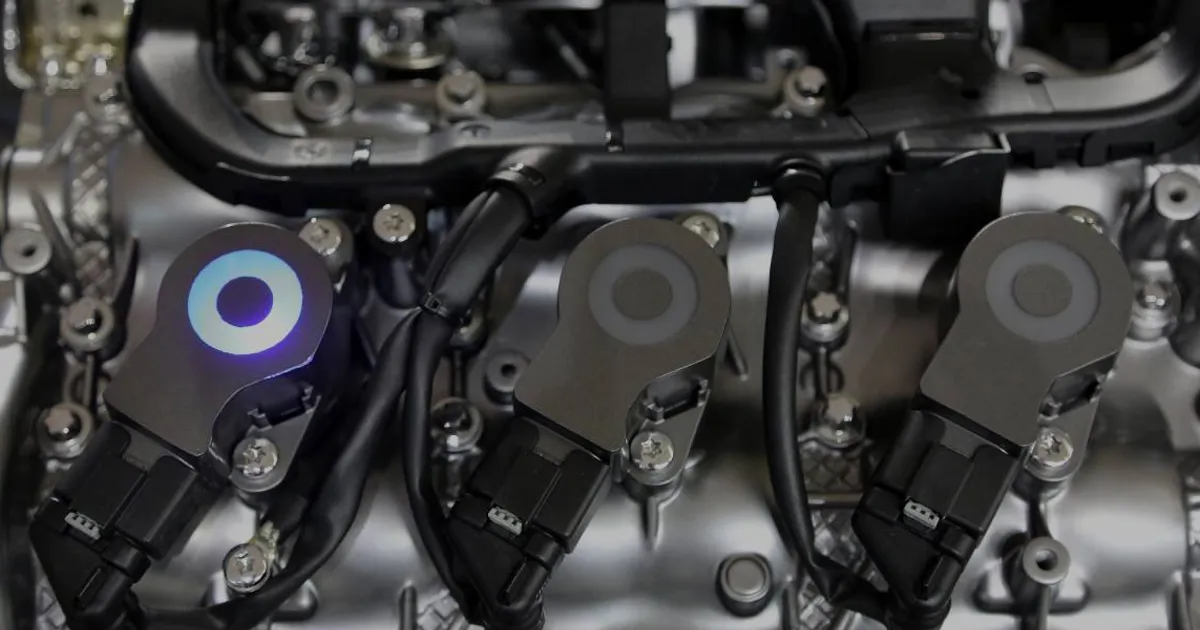
Fuel system seals face aromatic hydrocarbons, temperature cycling, and increasingly aggressive biofuel blends. The wrong material swells, hardens, or leaks—leading to evaporative emissions failures and warranty claims. Modern fuel systems must comply with stringent EPA and Euro 6 evaporative emissions standards, which require seals to maintain integrity across the vehicle's entire 15-year design life while exposed to fuels containing up to 85% ethanol or 20% biodiesel. This guide explains how to choose between NBR, HNBR and FKM for fuel injectors, fuel pump housings, tank sender units, and vapor management valves. We cover permeation resistance, low-temperature flexibility for cold-start compliance, and hardness recommendations for each component. The selection process must account for the specific fuel chemistry the vehicle will encounter, as E85 flex-fuel vehicles impose fundamentally different material demands than conventional gasoline or diesel applications. The aromatic content of modern fuels, particularly the benzene and toluene fractions in gasoline, acts as a powerful solvent on non-fluorinated elastomers. NBR compounds with medium acrylonitrile content (28-34%) offer reasonable resistance but will experience volume swell of 15-25% in aromatic-rich fuels, potentially causing extrusion into clearance gaps and eventual failure. FKM, with its highly fluorinated backbone, exhibits volume swell of less than 3% even in aggressive aromatic environments, maintaining dimensional stability critical for precision fuel injector seals. Temperature gradients across the fuel system are extreme. In-tank seals operate at relatively stable temperatures near ambient, ranging from -40°C in arctic conditions to perhaps +60°C in hot soak situations. Conversely, fuel rail seals mounted directly on the engine may experience continuous temperatures of +120°C to +150°C, with excursions to +200°C during hot restart conditions. This thermal differential means a single material specification is rarely adequate for all fuel system sealing points. Common failure modes in automotive fuel seals include compression set at high temperature (causing loss of sealing force during thermal cycling), permeation-driven evaporative emissions (especially through non-fluorinated materials), and chemical degradation from biodiesel esters that attack the polymer backbone of incompatible compounds. Biofuels, particularly fatty acid methyl esters (FAME), are more polar than petroleum hydrocarbons and can cause accelerated degradation in standard nitrile compounds through hydrolysis of the nitrile groups. Material selection must be supported by rigorous testing. OEM fuel system seals typically undergo 1,000+ hour fuel immersion tests at elevated temperature, followed by compression set evaluation and permeation rate measurement. Our FKM compounds are validated to GM 6031M, Ford WSB-M2G341-A, and VW/Audi TL 52612 specifications, ensuring they meet or exceed OEM requirements for permeation resistance, chemical compatibility, and mechanical retention after aging. Our engineering team provides application-specific recommendations based on the fuel type, temperature profile, and regulatory requirements of your market. We maintain a comprehensive library of OEM material specifications and can develop custom compounds for unique fuel formulations or extreme service conditions. All automotive fuel system O-rings are produced under IATF 16949 quality management with full batch traceability, material certification, and dimensional validation to micron-level tolerances.
Application Requirements
Recommended Materials
FKM (Viton)
Fuel injection systems, high-temperature fuel rails, turbocharger seals, and direct injection high-pressure pumps where continuous temperatures exceed +120°C and permeation must be minimized to meet evaporative emissions standards.
Temp: -20°C to +200°C
Best aromatic fuel resistance and low permeation. GFLT low-temp grades available to -40°C for cold-climate fuel sender applications.
HNBR
Fuel pump housings, in-tank sender units, vapor management valves, and fuel filler neck seals where temperatures remain below +150°C and cost optimization is important without sacrificing biofuel compatibility.
Temp: -40°C to +150°C
Cost-effective alternative to FKM for temperatures below +150°C. Excellent resistance to biodiesel and sour gasoline compared to standard NBR.
NBR
Low-cost fuel tank vent seals, rollover valve seals, and non-critical evaporative emissions fittings in mild climates with conventional gasoline without high aromatic content.
Temp: -40°C to +120°C
Not recommended for high aromatic content, E85, or continuous temperatures above +100°C. Best for legacy vehicle replacement parts and cost-sensitive applications.
FKM GFLT (Low-Temperature Grade)
Flex-fuel vehicle fuel sender units, cold-climate fuel system seals, and any application requiring both excellent fuel resistance and flexibility below -20°C.
Temp: -40°C to +200°C
Combines the chemical resistance of standard FKM with low-temperature flexibility approaching that of HNBR. Ideal for E85-compatible vehicles in northern climates.
FFKM
Racing fuel systems, methanol injection seals, and extreme-performance applications where standard FKM is inadequate due to aggressive oxygenated fuels or temperatures exceeding +200°C.
Temp: -15°C to +320°C
Ultimate chemical resistance for the most aggressive fuel chemistries. Higher cost justified only in extreme temperature or chemical exposure conditions.
Design Tips
- 1.Specify FKM for any component within 300 mm of the engine or turbocharger where continuous temperatures exceed +120°C, as NBR and HNBR will experience accelerated compression set in this environment.
- 2.Use 75–80 Shore A for fuel injector seals to ensure adequate conformability against precision-machined metal surfaces while maintaining sufficient modulus to resist extrusion at rail pressures up to 200 bar.
- 3.Always verify compatibility with E85 or biodiesel if the vehicle is flex-fuel certified; standard NBR may swell excessively (>30% volume increase) in high-ethanol blends, leading to gland overfill and extrusion.
- 4.Design fuel rail O-ring grooves with 15–20% compression rate to accommodate thermal expansion from cold-start (-40°C) to hot-soak (+150°C) conditions without losing sealing force.
- 5.Include PTFE backup rings for direct injection fuel rails operating above 150 bar, as even 90 Shore A FKM can extrude into clearance gaps under peak pressure spikes.
- 6.Specify low-extractables FKM grades for fuel sender units in direct contact with fuel, as some standard FKM compounds may leach oligomers that affect fuel quality sensors.
- 7.Account for compression set over the vehicle design life (typically 15 years/240,000 km) by selecting materials with compression set values below 25% after 1,000 hours at maximum service temperature.
- 8.Use lead-in chamfers of 15–20° on all fuel system bores to prevent installation damage, as even minor nicks on O-ring surfaces can create leakage paths that fail evaporative emissions tests.
Common Sizes
| Size | Typical Use |
|---|---|
| AS568-009 to -014 | Fuel injector tip seals for multi-port and direct injection systems |
| AS568-110 to -116 | Fuel pump housing and sender unit seals |
| Custom 10–30 mm ID | Tank filler neck and rollover valve seals |
Frequently Asked Questions
Is FKM better than NBR for fuel systems?
Yes, for high temperatures and aromatic fuels. FKM offers superior heat resistance and lower fuel permeation than NBR. FKM maintains its mechanical properties up to +200°C, whereas standard NBR begins to degrade above +100°C. In terms of permeation, FKM exhibits fuel vapor transmission rates approximately 5–10 times lower than NBR, which is critical for meeting modern evaporative emissions standards (EPA Tier 3, Euro 6). However, NBR remains acceptable for low-temperature, low-aromatic applications such as fuel tank vent seals in mild climates, where its lower cost and excellent low-temperature flexibility (-40°C) make it economically attractive. HNBR occupies the middle ground, offering better temperature and biofuel resistance than NBR at a moderate cost premium.
Can HNBR replace FKM in fuel injection systems?
HNBR can replace FKM in fuel pumps and sender units up to +150°C. For continuous service above +150°C or direct fuel rail contact where temperatures spike during hot restart, FKM remains the safer choice. HNBR offers excellent resistance to biodiesel (B5–B20) and has better low-temperature flexibility than standard FKM, making it suitable for in-tank applications and flex-fuel vehicles in temperate climates. However, the higher aromatic resistance and lower permeation of FKM make it indispensable for high-pressure fuel rails and components near the engine. In practice, many modern vehicles use a hybrid approach: HNBR for in-tank components and FKM for under-hood, high-temperature locations.
What hardness is best for fuel injector O-rings?
75–80 Shore A is typical for fuel injector O-rings. It provides enough conformability to seal against micron-level surface finish without excessive compression load that could cause permanent set. Fuel injector seals must seal against precisely machined metal seats with surface finishes typically between Ra 0.2–0.8 μm. A hardness of 75 Shore A allows the O-ring to flow into microscopic surface imperfections while maintaining sufficient modulus to resist extrusion into the injector body clearance gap. For high-pressure direct injection systems (150–200 bar), some OEMs specify 80–85 Shore A to improve extrusion resistance, often combined with a PTFE backup ring. Softer compounds (60–70 Shore A) are occasionally used for low-pressure applications but may lack the structural integrity needed for long-term fuel immersion at elevated temperature.
How do biofuels affect O-ring material selection?
Biofuels, particularly ethanol (E85) and biodiesel (FAME), are more polar and oxygenated than petroleum hydrocarbons, which fundamentally changes their interaction with elastomeric seals. Ethanol can cause significant swelling in NBR (up to 30% volume increase) and may extract plasticizers, leading to embrittlement over time. Biodiesel esters can hydrolyze the nitrile groups in NBR, causing chain scission and accelerated degradation. HNBR, with its saturated backbone, resists biodiesel hydrolysis much better than NBR and shows lower swell in ethanol blends. FKM exhibits minimal swell in both ethanol and biodiesel, making it the safest choice for flex-fuel vehicles. When designing for biofuel compatibility, always specify materials validated for the specific blend (E10, E85, B5, B20) and conduct long-term immersion testing at elevated temperature to verify retention of mechanical properties.
What causes fuel system O-rings to fail prematurely?
Premature failure in fuel system O-rings is typically caused by one or more of the following mechanisms: (1) Compression set due to prolonged exposure to temperatures above the material's rating, causing permanent deformation and loss of sealing force; (2) Chemical swelling or degradation from incompatible fuel chemistry, particularly high-aromatic gasoline or biofuel blends; (3) Extrusion into clearance gaps under high pressure, especially in direct injection systems without backup rings; (4) Thermal cycling fatigue from repeated hot-start/cold-soak cycles, which induces stress cracking; (5) Installation damage from sharp edges or improper lubrication, creating initial defects that propagate under dynamic stress. Proper material selection, groove design, and assembly procedures can mitigate all of these failure modes.
What certifications are required for automotive fuel system O-rings?
Automotive fuel system O-rings must comply with multiple standards depending on the application and market. Key certifications include: SAE J30 for fuel and oil hose materials (often referenced for seal compounds); EPA evaporative emissions requirements (SHED test compliance); OEM-specific material specifications such as GM 6031M, Ford WSB-M2G341-A, VW/Audi TL 52612, and Toyota TSM 1505G; and ISO 19078 for methanol fuel compatibility. For the European market, compounds may need to meet specific OEM approvals for Euro 6 emissions compliance. We provide material test reports, batch certificates, and can support OEM-specific validation testing including permeation rate measurement, compression set after fuel aging, and low-temperature flexibility testing.
Can you supply custom sizes for prototype fuel system development?
Yes, we specialize in rapid prototyping for automotive fuel system development. We can produce custom O-rings in any cross-section and diameter within 2–3 weeks, including multi-cavity tooling for prototype quantity production. Our engineering team works directly with your design engineers to optimize groove geometry, compression rate, and material specification for your specific fuel chemistry and temperature profile. We offer a range of FKM, HNBR, and NBR compounds with varying fluorine content, acrylonitrile percentage, and curing systems to match your performance requirements and cost targets. All prototype parts are produced under the same IATF 16949 quality system as production parts, with full dimensional reports and material certification.
How often should fuel system O-rings be replaced during vehicle service?
Fuel system O-rings are designed to last the vehicle's service life (typically 15 years or 240,000 km) when properly specified and installed. However, they should always be replaced when servicing fuel system components such as injectors, fuel pumps, or fuel rails, as the compression set from initial installation means the seal will not recover to its original shape after removal. Reusing an O-ring almost guarantees a leak path. For high-mileage vehicles (over 200,000 km), proactive replacement of in-tank sender unit seals is recommended during fuel pump service, as these seals experience continuous fuel immersion and thermal cycling. Always use OEM-specified or equivalent replacement seals, as generic hardware-store O-rings are rarely formulated for modern fuel chemistry and may fail within months.
What is the difference between FKM Type A and GFLT grades?
FKM Type A (standard dipolymer) contains approximately 66% fluorine and offers excellent resistance to hydrocarbons, oils, and standard fuels. It operates from approximately -20°C to +200°C. FKM GFLT is a terpolymer containing a perfluoromethylvinyl ether (PMVE) monomer that provides significantly improved low-temperature flexibility (TR10 of -30°C to -40°C) while maintaining high-temperature capability. GFLT grades are essential for cold-climate fuel systems where seals must remain flexible at -40°C during cold starts. The trade-off is slightly higher cost and marginally lower chemical resistance to certain solvents compared to Type A. For most automotive fuel applications, GFLT is the preferred choice when low-temperature performance is required, while Type A suffices for warm-climate or under-hood applications where low-temperature flexibility is less critical.
How do you test O-ring permeation for evaporative emissions compliance?
Fuel permeation testing follows standardized methods such as ASTM D814 (rubber permeability) or SAE J2657 (fuel system permeation). O-ring samples are mounted in permeation cells with fuel on one side and a nitrogen sweep on the other. The nitrogen stream carries any permeated fuel vapor to a flame ionization detector (FID) or mass spectrometer for quantification. Tests are conducted at elevated temperature (typically +40°C to +60°C) to accelerate the process. For automotive compliance, the measured permeation rate must fall below OEM-specific limits, which for modern vehicles are typically in the range of 0.5–2.0 g/m²/day. Our FKM compounds consistently achieve permeation rates below 0.5 g/m²/day in CM15 test fuel, comfortably meeting the most stringent OEM requirements.
Fuel system seal quote
We supply FKM, HNBR and NBR O-rings for automotive fuel systems. OEM tolerances, fast sampling.