
Aerospace O-Rings for Hydraulic and Fuel Systems
High-reliability sealing for commercial aviation, defence and UAV applications.
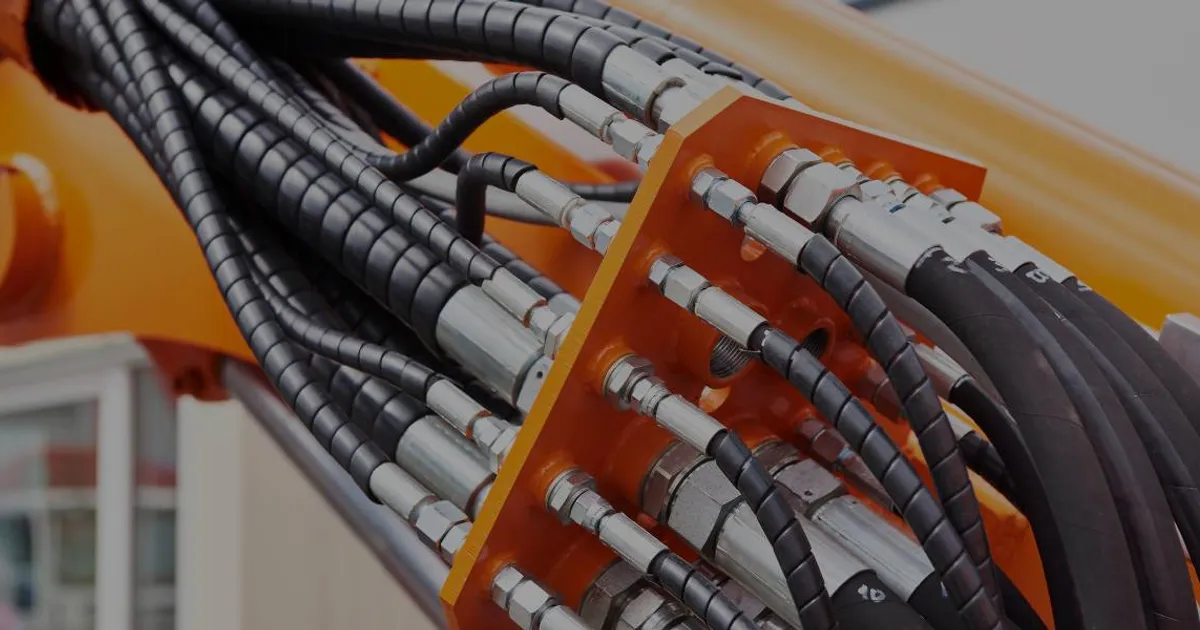
Aerospace sealing is one of the most demanding applications for O-rings. Systems must operate reliably across extreme temperature cycles — from -55°C at altitude to +200°C near engines — while resisting jet fuel, hydraulic fluids (Skydrol, MIL-PRF-5606), and ozone at high altitude. A seal failure in flight can have catastrophic consequences, making material qualification, traceability, and quality control paramount. We supply aerospace O-rings in FKM, low-temperature FKM (GFLT), fluorosilicone (FVMQ), nitrile (NBR), and perfluoroelastomer (FFKM) to AS568 dimensions and aerospace material specifications. All materials are lot-traceable and supported by batch test reports. Our aerospace program is AS9100 certified, ensuring that every seal meets the stringent quality requirements of the aviation industry. The aerospace environment imposes unique challenges. At cruise altitude (35,000–40,000 feet), ambient temperature is -55°C and pressure is 3–4 psi. Hydraulic systems must start and operate immediately upon landing in arctic conditions. Engine nacelle seals may see +200°C during takeoff and -55°C during descent within a single flight. Fuel system seals must resist aromatic jet fuel (Jet A, JP-8) while maintaining flexibility at -40°C for cold-start. Hydraulic seals must resist phosphate ester fluids (Skydrol) that aggressively attack standard elastomers. Each system has distinct material requirements that must be precisely matched. Jet fuel chemistry affects seal selection. Jet A and Jet A-1 are kerosene-based with aromatic content of 15–25%. JP-8 is Jet A-1 with military additives including corrosion inhibitors, anti-icing agents, and static dissipaters. These additives can affect seal compatibility—some corrosion inhibitors are amine-based and can attack FKM at high temperature. The aromatic content causes swelling in NBR (10–20% volume increase) but minimal swell in FKM (<3%). FVMQ offers a compromise with good fuel resistance and excellent low-temperature flexibility. For fuel systems, FKM is standard for temperatures above -20°C, while FVMQ is required for temperatures below -30°C. Aerospace hydraulic fluids present their own challenges. MIL-PRF-5606 is a mineral oil-based fluid compatible with NBR. MIL-PRF-83282 is a synthetic hydrocarbon (polyalphaolefin) requiring FKM or FVMQ. Skydrol ( phosphate ester) is the standard for commercial aircraft and aggressively attacks NBR, requiring FKM, FVMQ, or specialized compounds. Each hydraulic fluid type requires specific seal materials, and mixing materials can cause rapid failure. The trend in modern aircraft is toward higher-temperature hydraulic fluids (MIL-PRF-87257, operating to +135°C) that require FKM or FFKM seals. Outgassing at high altitude is a concern for seals in pressurized cabins and vacuum systems. At low pressure, volatile compounds in the seal material outgas into the cabin air or vacuum environment. Aerospace-grade compounds are formulated with low-volatility plasticizers and extended post-curing to minimize outgassing. ASTM E595 testing (total mass loss <1.0%, collected volatile condensable materials <0.10%) is standard for space applications and increasingly required for commercial aviation. Common failure modes in aerospace seals include: compression set from thermal cycling; extrusion under pressure spikes during landing gear deployment; chemical degradation from incompatible hydraulic fluid; low-temperature leakage when seals become too rigid; and spiral failure in dynamic actuators. Each failure mode is analyzed using forensic techniques including SEM, FTIR, and DSC to determine root cause. Our aerospace program includes full material qualification to MIL/AMS specifications, batch testing with certificates of conformance, and supply chain traceability from raw material through finished part. We support PMA (Parts Manufacturer Approval) applications and can provide material for OEM qualification programs. Custom compounds can be developed for specific aircraft programs, with full testing including fluid immersion, thermal cycling, and vibration.
Application Requirements
Recommended Materials
FKM (Viton)
Fuel nozzles, engine seals, high-temp hydraulics, and any application requiring excellent fuel and oil resistance above -20°C.
Temp: -20°C to +200°C
Type A for standard applications; GFLT low-temp grade to -30°C for cold-climate fuel systems. Meets AMS-R-83485.
FVMQ (Fluorosilicone)
Fuel system seals, hydraulic actuators, and cold-start flexibility to -55°C. The standard for military aircraft operating in arctic conditions.
Temp: -55°C to +175°C
Standard for low-temp fuel and hydraulic systems. Good fuel resistance with excellent low-temperature flexibility. Meets AMS-R-25988.
NBR
Ground support equipment, hydraulic actuators using MIL-PRF-5606 fluid, and low-cost replacement parts where temperature remains above -40°C.
Temp: -40°C to +120°C
Low-temp NBR (-40°C) for cold-climate ground support. Not suitable for Skydrol or high-aromatic fuels.
FFKM (Kalrez)
Engine hot-section seals, extreme chemical resistance, and applications where standard FKM or FVMQ is inadequate due to temperature or chemical exposure.
Temp: -20°C to +320°C
High-temp aerospace grade for engine seals and extreme environments. Ultimate chemical resistance. Meets AMS-R-83461.
FKM GFLT
Next-generation aircraft fuel systems requiring both excellent fuel resistance and low-temperature flexibility below -30°C without the cost of FVMQ.
Temp: -30°C to +200°C
Advanced low-temp FKM with improved TR10 compared to standard Type A. Bridges the gap between FKM and FVMQ for fuel systems.
Design Tips
- 1.Use 70–80 Shore A for dynamic seals to minimise friction and heat generation. Harder compounds increase friction and wear in reciprocating actuators.
- 2.Specify AS568 Class 1 tolerances for critical gland fits. Aerospace applications require tighter tolerances than industrial due to weight and space constraints.
- 3.Allow for thermal contraction at altitude — groove fill should not exceed 80% to prevent extrusion when the seal contracts at -55°C.
- 4.Avoid standard FKM below -20°C; specify GFLT or FVMQ for cryogenic fuel exposure. Standard FKM becomes too rigid to seal effectively below -20°C.
- 5.Use lead-in chamfers on all bores to prevent installation damage. Even minor nicks can cause leakage at altitude due to reduced sealing force.
- 6.Specify FVMQ for Skydrol hydraulic systems. NBR is attacked by phosphate ester fluids and will fail within days in Skydrol service.
- 7.Design for 15–20% compression in static aerospace seals. Higher compression provides reliability margin for thermal cycling and long-term compression set.
- 8.Validate seals through full thermal cycle testing (-55°C to +200°C) before flight qualification. Laboratory testing must simulate actual flight profiles including rapid temperature transitions.
Common Sizes
| Size | Typical Use |
|---|---|
| AS568-010 through AS568-050 | Small bore actuators, instrument seals, and fuel injector seals |
| AS568-110 through AS568-178 | Fuel system fittings, hydraulic connectors, and valve seals |
| AS568-210 through AS568-284 | Hydraulic cylinders, landing gear actuators, and engine seals |
| Custom sizes | Turbine engine seals, APU seals, and proprietary OEM designs |
Frequently Asked Questions
What is the best O-ring material for jet fuel?
FKM and FVMQ are both excellent for jet fuel (Jet A, JP-8). FVMQ is preferred when low-temperature flexibility below -30°C is required. FKM is used for higher-temperature fuel system seals. Jet fuel contains 15–25% aromatic hydrocarbons that cause significant swelling in NBR (10–20% volume increase) but minimal swelling in FKM (<3%). FKM Type A is standard for fuel nozzles, engine seals, and fuel system fittings operating above -20°C. FKM GFLT extends low-temperature capability to -30°C while maintaining excellent fuel resistance. FVMQ is specified for military aircraft and cold-climate operations where -55°C flexibility is required. FVMQ has slightly higher fuel swell than FKM (5–8%) but still performs reliably. For ultra-high temperature engine seals (>+200°C), FFKM is required. NBR is not recommended for jet fuel due to excessive aromatic swell and limited temperature capability.
Can standard FKM be used at -55°C?
No. Standard FKM becomes too rigid below approximately -20°C. For -55°C service, specify FKM GFLT or FVMQ (fluorosilicone). The glass transition temperature (Tg) of standard FKM Type A is approximately -20°C, and its TR10 (temperature at which the elastomer recovers 10% of its compression) is approximately -15°C. At -55°C, standard FKM is glassy and cannot seal against surface imperfections. FKM GFLT contains perfluoromethylvinyl ether (PMVE) monomer that disrupts polymer chain crystallization, lowering Tg to -30°C and TR10 to -25°C. FVMQ has Tg of -65°C and remains flexible to -55°C. For fuel systems requiring -55°C operation, FVMQ per AMS-R-25988 is the standard. For hydraulic systems, FVMQ or specialized low-temp HNBR may be used. The choice depends on the specific fluid and temperature profile—always verify low-temperature sealing with compression set testing at the minimum service temperature.
Do you supply O-rings to aerospace material specifications?
Yes. We can manufacture to AMS-R-83485 (FKM), AMS-R-25988 (FVMQ), AMS-R-83461 (FFKM), and MIL-PRF-25988 specifications. Material test reports and batch certificates are provided as standard. Our aerospace quality system is AS9100 certified, ensuring full traceability from raw material through finished part. Each batch is tested for: hardness (Shore A); tensile strength and elongation; compression set; fluid immersion (fuel or hydraulic fluid as applicable); low-temperature flexibility; and outgassing (for space applications). Test reports include the batch number, test dates, test results, and acceptance criteria. We also provide: Certificate of Conformance; material certification; process certification; and lot traceability records. For PMA applications, we support qualification testing and provide all documentation required by the FAA. Custom testing per OEM specifications (Boeing, Airbus, Lockheed Martin) is available.
What hardness is recommended for aerospace hydraulic seals?
70–80 Shore A is standard for aerospace hydraulic seals. 90 Shore A may be used for high-pressure static seals with backup rings. For dynamic seals in landing gear actuators, flight control actuators, and brake systems, 70–75 Shore A provides the best balance of sealing, friction, and wear. Softer compounds conform better to surface imperfections and require less breakaway force, reducing stick-slip. Harder compounds (80–90 Shore A) are used for: high-pressure applications where extrusion resistance is critical; large-diameter seals where gravity deformation is a concern; and static seals where friction is not a concern. For Skydrol systems, 75 Shore A FVMQ is typical. For MIL-PRF-5606 systems, 70 Shore A NBR is standard. The groove design must be matched to the hardness—softer seals need tighter grooves; harder seals need more compression. Always verify the combination through testing.
How does Skydrol differ from other hydraulic fluids for seal selection?
Skydrol is a phosphate ester hydraulic fluid used in commercial aircraft. It is chemically very different from mineral oil-based fluids (MIL-PRF-5606) and synthetic hydrocarbons (MIL-PRF-83282). Phosphate esters are polar compounds that aggressively attack hydrocarbon elastomers including NBR, HNBR, and EPDM. NBR swells excessively (>50%) and degrades within days in Skydrol. FKM, FVMQ, and FFKM are resistant to Skydrol due to their fluorinated backbones. FVMQ is the most common seal material for Skydrol systems because it combines Skydrol resistance with low-temperature flexibility. FKM is also used but has limited low-temperature capability. Some specialized compounds (AFLAS, certain polyurethanes) have limited Skydrol resistance but are not standard for aerospace. When servicing Skydrol systems, always use seals specified for phosphate ester compatibility—using NBR or other incompatible materials will cause immediate failure and potential hydraulic system damage.
What is the difference between AMS and MIL specifications?
MIL (Military) specifications were the original U.S. defense material standards. AMS (Aerospace Material Specifications) are maintained by SAE International and have largely replaced MIL specifications for aerospace materials. The transition from MIL to AMS occurred in the 1990s–2000s as part of a broader shift from government-managed to industry-managed standards. Key aerospace O-ring specifications include: AMS-R-83485 (replaced MIL-R-83485 for FKM); AMS-R-25988 (replaced MIL-R-25988 for FVMQ); and AMS-R-83461 (replaced MIL-R-83461 for FFKM). The technical requirements are generally similar between equivalent MIL and AMS specifications, but AMS specifications may include updated test methods and quality requirements. For new designs, AMS specifications should be specified. For legacy systems, MIL specifications may still be referenced in drawings and maintenance manuals. We manufacture to both MIL and AMS specifications and can cross-reference between the two systems.
How do you ensure batch traceability for aerospace seals?
Batch traceability is ensured through a comprehensive quality management system per AS9100. The process includes: (1) Raw material receipt with lot number assignment and certificate of analysis verification. (2) Compound mixing with batch number linking to raw material lots. (3) Molding with batch number and cavity identification on each part or packaging. (4) Post-curing with batch number and process parameter records. (5) Inspection with dimensional reports and defect records linked to batch. (6) Testing with test reports linked to batch. (7) Packaging with batch number, part number, and serial number (if applicable). All records are retained for a minimum of 10 years per aerospace requirements. The batch number on the seal or packaging can be traced back through all manufacturing steps to the raw material supplier lots. This traceability is essential for failure investigation, recall management, and regulatory compliance. We provide batch traceability certificates with every aerospace order.
What testing is required for aerospace seal qualification?
Aerospace seal qualification typically includes: (1) Physical property testing: hardness, tensile strength, elongation, compression set per ASTM D1414 or D412. (2) Fluid immersion testing: 70 hours at +70°C or +100°C in the specified fluid (fuel or hydraulic), measuring volume swell, hardness change, and tensile property retention. (3) Low-temperature testing: TR10 or brittleness temperature per ASTM D1329 or D2137. (4) Thermal aging: property retention after aging at elevated temperature. (5) Outgassing: ASTM E595 for space applications. (6) Leakage testing: helium mass spectrometry or pressure decay. (7) Dynamic testing: reciprocating or rotary wear testing. (8) Vibration testing: per RTCA DO-160 for environmental qualification. Testing is performed to the specific AMS or MIL specification, with acceptance criteria defined in the specification. For OEM qualification programs, additional testing may be required including full-scale functional testing in the actual component.
Can you support PMA applications for aftermarket aerospace seals?
Yes, we support Parts Manufacturer Approval (PMA) applications for aftermarket aerospace seals. The PMA process requires demonstrating that the replacement part is equivalent to or better than the original type-certificated part. Our support includes: reverse engineering of the original seal (material identification, dimensional measurement, physical property testing); material qualification to the applicable AMS or MIL specification; manufacturing process qualification; and submission of test data and quality documentation to the FAA. We provide all required documentation including: material test reports; dimensional inspection reports; process specifications; quality manual excerpts; and certificate of conformance samples. Our AS9100 certification supports the quality system requirements. We have successfully supported PMA applications for commercial aircraft (Boeing, Airbus), business jets, helicopters, and military platforms. The typical PMA timeline is 6–12 months from initial analysis to FAA approval.
What causes aerospace seal leakage at high altitude?
High-altitude leakage is caused by the combination of low temperature, low pressure, and thermal contraction. At 35,000 feet, ambient temperature is -55°C and pressure is 3.5 psi. Seals that seal perfectly at ground level may leak at altitude due to: (1) Low temperature reduces seal elasticity, decreasing sealing force. (2) Thermal contraction reduces seal cross-section, reducing compression. (3) Low pressure differential across the seal may be insufficient to energize it. (4) Differential thermal contraction between seal and housing creates clearance gaps. (5) Gas trapped in the system expands at altitude, creating internal pressure that forces leakage. To prevent altitude leakage: specify materials with confirmed low-temperature performance (FVMQ for -55°C); design grooves with adequate compression (15–20% at ambient) to accommodate contraction; verify sealing at the minimum temperature and pressure; and use dual-seal designs for critical applications. Altitude chamber testing with thermal cycling is essential for qualification.
Request an aerospace O-ring quote
Get a quote with material certification for aerospace hydraulic and fuel system seals.